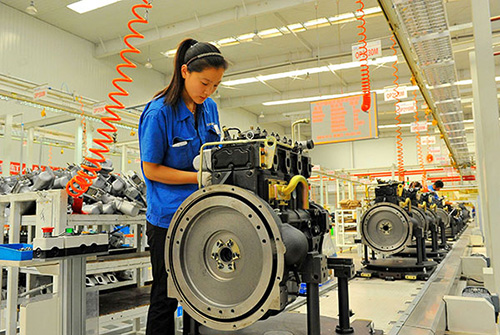
BEIJING - For 26-year-old iPad addict Zhou Wen, going to work is a lot like more play on his beloved device.
Though employed by textile producer the Ruyi Group, Zhou has never used a sewing needle. His job is to drive a battery-powered car around a new Ruyi plant in northwest China to locations shown on the map on his iPad and operate machines there following instructions on the screen.
"It is like a game, with new quests every day," Zhou said.
Before Ruyi and many other Chinese companies raced into the digital age, working in its plants wasn't like this. The fact that Zhou's predecessors used to have to walk up to 16 km per shift in their patrols of the machines shows how far China has come in a generation or less.
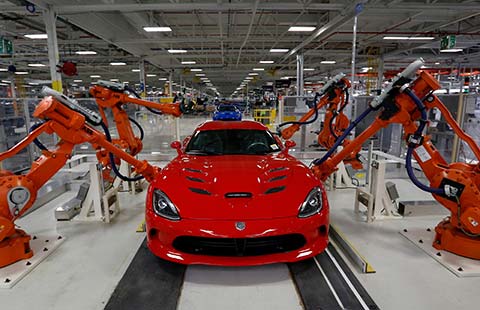
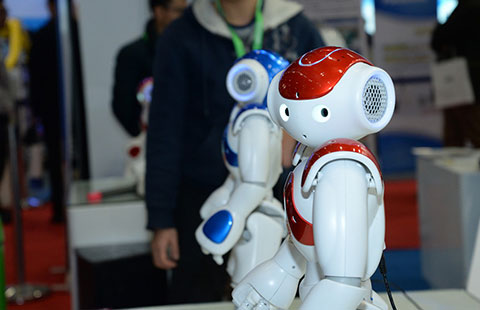
As industries turn to new technologies under encouragement from the government, labor forces have been liberated and production efficiency massively increased.
Policymakers and entrepreneurs agree that innovation will generate more sustainable growth as China's old model of cheap manufacturing and exports runs out of steam. Industrial modernization is a hot topic at the annual session of the National People's Congress (NPC), China's legislature.
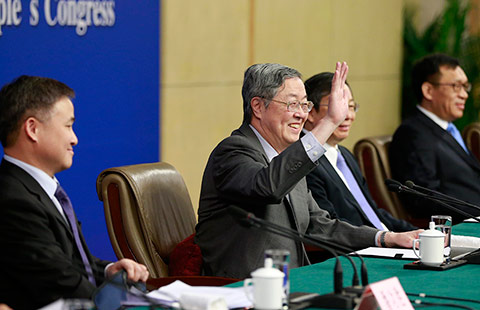
Many of the nearly 3,000 deputies to the NPC session going on in Beijing are speaking from personal experience. Among the deputies is Qiu Yafu, Ruyi's chairman.
NPC deputy Wang Minghui is the head of a traditional Chinese medicine company that has seen its profits grow by 30 percent for 16 consecutive years since it started basing its products on modern science as well as tradition.
The Yunnan Baiyao Group now makes herbal bandages, sprays and toothpastes.
While some industries like textiles and traditional medicine have been transformed under the modernization drive, others have been created by it.
The less-developed Guizhou Province, for example, now serves as a base camp for the big data industry, with a facility marketed as the world's first big data exchange center.
Wang Wei, another NPC deputy, has benefited from the data as his company is developing all kinds of chips and wearable devices to monitor people's health.
Big data processing requires cloud computing. The Inspur Group, headquartered in Shandong Province, is a leading solution and service provider that builds open data platforms for governments and enterprises.
"Just like China's bullet trains and nuclear power, Inspur's cloud computing is going global," said the company's head, Sun Pishu, also an NPC deputy.
Inspur entered the U.S. market last year and is planning to build cloud-computing centers in the Belt and Road regional trade and infrastructure network.
China has already contributed a quarter of world economic growth, and many observers believe the national strategy of innovation will bring new vigor to the global economy.
"China's active participation in the new scientific and industrial revolution will make a real difference to the global economy," said Chen Fengying, a scholar with the China Institute of Contemporary International Relations.

Copyright 1995 - . All rights reserved. The content (including but not limited to text, photo, multimedia information, etc) published in this site belongs to China Daily Information Co (CDIC). Without written authorization from CDIC, such content shall not be republished or used in any form. Note: Browsers with 1024*768 or higher resolution are suggested for this site.
License for publishing multimedia online 0108263 Registration Number: 130349