 |
|
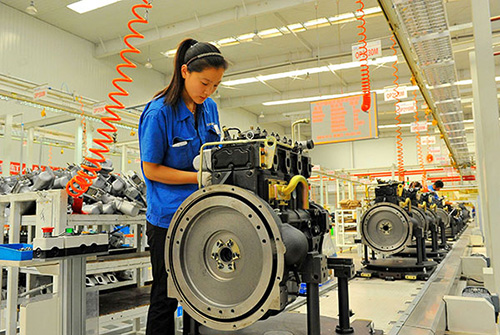
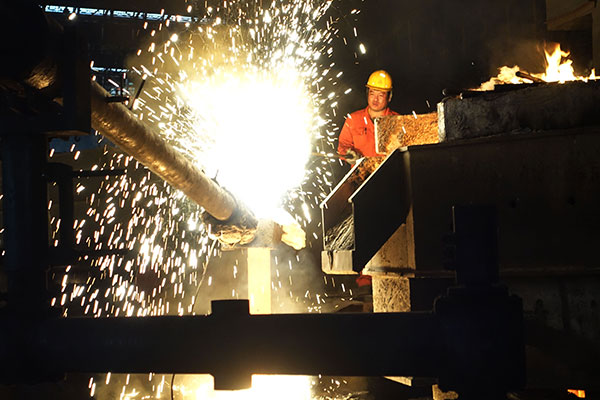
Workers at a steel factory in Dalian, Liaoning province. [Photo/China Daily] |
BEIJING - Redundancies are inherently painful for those losing their jobs, their families and society at large, but for industries weighed down by overcapacity, it is a transition that could not happen soon enough.
In industries such as coal and steel, change is imperative as the current model is unsustainable. The production of steel is no longer tethered to market demand and it is now is more than double the combined production of the next four leading industries.
The result is destructive, prices are in free fall and mills stand ghostly quiet as operating losses have grounded production to a halt. Employees, in spite of keeping their jobs, may receive meager salaries but have little assurance that next month's pay packet will arrive. What light there may be at the end of the tunnel seems to dim every day.
It is against this background that China expects a wave of job losses in industries struggling with overcapacity -- 1.8 million in coal and steel, according to the Ministry of Human Resources and Social Security.
China has promised to let the market play the decisive role in the economy, and the market has spoken. Take financing for example, defaults have scared investors from purchasing bonds from these industries and commercial banks are decreasing exposure.
The consensus is that from a business perspective, these industries are simply no longer viable and it is the market -- rather than the government -- that is the ultimate force behind the closure of coal mines and steel mills.
To brace for the fallout the government plans to allocate 100 billion yuan ($15.4 billion) over two years to help those that lose their jobs.
For well-seasoned observers, China has always strived to ensure the harmony and stability of its workforce, especially around the key annual legislative sessions, which convene this week. The fact that more than one minister has spoken publicly about the expected job losses ahead of these meetings is evidence that the government is not avoiding the subject, but rather tackling it head on.
The government's commitment to addressing overcapacity also chimes with its economic reform agenda, notably the shift to supply-side reform, which Beijing has made its top economic priority. The supply gluts in steel and coal are remnants of an era when growth was driven by low-end manufacturing. As China strives to elevate its economic growth model, job losses will be an unfortunate but necessary side effect.

Copyright 1995 - . All rights reserved. The content (including but not limited to text, photo, multimedia information, etc) published in this site belongs to China Daily Information Co (CDIC). Without written authorization from CDIC, such content shall not be republished or used in any form. Note: Browsers with 1024*768 or higher resolution are suggested for this site.
License for publishing multimedia online 0108263 Registration Number: 130349