BEIJING -- China's vocational education has received more government support following a survey last year that exposed weaknesses in the system.
By December, all provincial governments had set a budget for each student at vocational colleges and allocated the money to colleges , said Minister of Education Yuan Guiren, when briefing the Standing Committee of the National People's Congress (NPC) at the bi-monthly session that opened on Wednesday.
Yuan did not reveal the average spending per student but agreed to raise the amount to at least 12,000 yuan (about $1,850) in 2017.
The central government also expects similar policy for students at secondary vocational schools and 26 provinces, autonomous regions and municipalities have done so, he said.
Yuan's report was a followup to the NPC Standing Committee's survey of vocational education in 2015. From March to May Zhang Dejiang, chairman of the NPC Standing Committee, led a team to investigate vocational education and found many problems in the system, including poor public recognition and erratic funding.
At the bi-monthly session in June, the top legislature reviewed the survey results and questioned officials including vice premier Liu Yandong, Finance Minister Lou Jiwei and Yuan. The central government has since issued policies on 64 related issues.
Nationally, in 2015, about 15 billion yuan was spent in improving quality in vocational schools and colleges and training teachers, while 4 billion yuan was spent on infrastructure of secondary vocational schools.
About 92 percent of secondary vocational school students pay no tuition and about 40 percent receive financial assistance. The annual allowance increased from 1,500 yuan in 2014 to 2,000 yuan in 2015. Low-income families receive an extra allowance of 3,000 yuan every year to support their children at vocational schools.
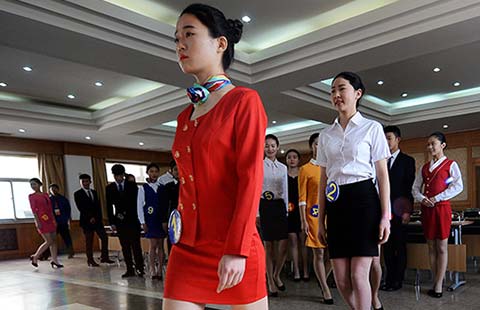
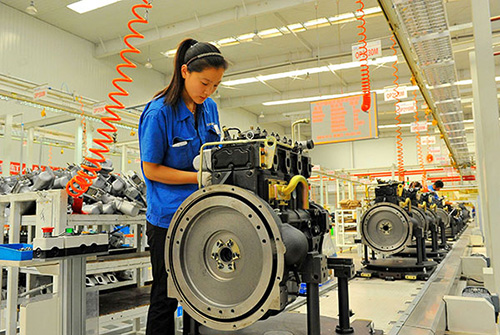
To address complaints that schools failed to train students to meet the demands of industry, the ministry launched 165 trial projects to connect schools with businesses last year. Vocational schools in rich provinces are encouraged to take students from less developed regions.
About 95 percent of vocational school students are employed right after graduation and about 90 percent of vocational college graduates, Yuan said, while admitting that there are still outstanding problems, such as a general bias against vocational school graduates, skilled blue-collar workers and technicians.
Many vocational schools still need to improve their courses while those in less developed regions require better facilities, he said.
More is needed to encourage enterprises to become involved, he said.
The ministry is drafting a revision to the vocational education law and hope the bill can be reviewed by the legislature as early as possible, he said.

Copyright 1995 - . All rights reserved. The content (including but not limited to text, photo, multimedia information, etc) published in this site belongs to China Daily Information Co (CDIC). Without written authorization from CDIC, such content shall not be republished or used in any form. Note: Browsers with 1024*768 or higher resolution are suggested for this site.
License for publishing multimedia online 0108263 Registration Number: 130349