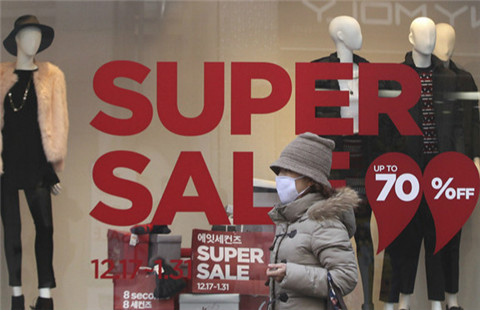
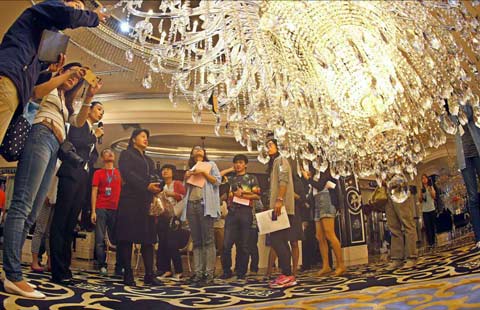
China's luxury industry is still feeling the impact of the country's economic slowdown and domestic consumers' growing interest in shopping overseas.
The industry contracted for the second consecutive year by 2 percent last year, with the total amount spent falling to 113 billion yuan ($17.2 billion), according to a report from consulting firm Bain & Co.
The decline was seen particularly in sales of menswear, watches and leather products, which were down by 12 percent, 10 percent and 5 percent.
The anti-graft campaign, launched in 2013, combined with the effects of the economic slowdown and stock market volatility in the second and third quarters, further propelled the market deceleration.
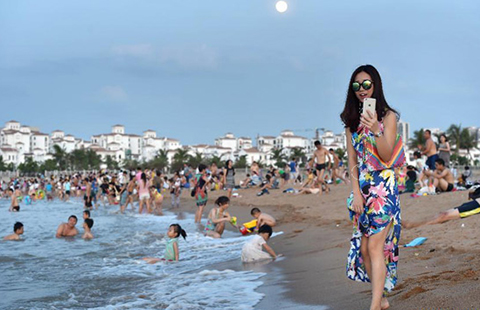
The survey, which polled 1,447 Chinese consumers, found the total amount they spent on luxury purchases overseas rose by 10 percent year-on-year in 2015.
Japan was the most popular destination, with consumers' luxury spending soaring by 251 percent. Consumption in the Republic of Korea and Europe rose by 33 percent and 31 percent, respectively, while consumption on the Chinese mainland fell by 2 percent.
Cross-border and overseas websites took 12 percent of the Chinese spending on luxury goods last year.
Bruno Lannes, partner and head of the consumer products, retail and luxury practice at Bain & Co Greater China, said increased accessibility and availability, such as localized Chinese websites of some overseas online platforms, had encouraged purchasing through cross-border e-commerce platforms.
Zhai Ruoyun, an administrative director at a Shanghai-based manufacturing company, used to rely heavily on overseas shopping agents, or daigou, in recent years for clothes, cosmetics and home appliances.
But she hardly used any of their services last year, preferring the Chinese versions offered by overseas platforms, saying these are "professional and much more reliable".
The central government is attempting to "localize and officialize" consumption on the mainland, rolling out policies that include tightening customs controls on passengers and parcels, and reducing import duties.
Lannes said that luxury consumption in Hong Kong slumped by 25 percent last year due to a decline in visitors from the mainland, reduced spending and a less favorable currency exchange rate when compared to the ROK or Japan.
Christopher Bailey, chief executive officer at Burberry, said sales in the company's Asia Pacific market picked up in the third quarter, excluding sluggish performances in Hong Kong and Macao.
As the number of visitors to Hong Kong continued to drop, the company's sales in the city fell by more than 20 percent in the third quarter. Apart from aggressive expansion by luxury brands Coach and Michael Kors, brick-and-mortar store closures by luxury companies outnumbered newly opened stores last year, with 58 stores closing.

Copyright 1995 - . All rights reserved. The content (including but not limited to text, photo, multimedia information, etc) published in this site belongs to China Daily Information Co (CDIC). Without written authorization from CDIC, such content shall not be republished or used in any form. Note: Browsers with 1024*768 or higher resolution are suggested for this site.
License for publishing multimedia online 0108263 Registration Number: 130349