 |
|
Wang Yiwei |
11. Will the implementation of the Belt and Road Initiative break fresh ground?
Wang Yiwei, a professor in international relations at Renmin University of China
Yes. For the Chinese government, the priority in the past two years has been promoting the Silk Road Economic Belt and the 21st Century Maritime Silk Road worldwide, and seeking to achieve consensuses with relevant countries and international organizations (over 60 have said yes). In the following year, it will be the operation that counts.
The foreseeable breakthroughs at home and abroad will take place in some major inland infrastructural projects such as the China-Pakistan Economic Corridor, and the revamping of roadside harbors, including Jakarta in Indonesia, Sihanoukville in Cambodia, and Gwadar Port in Pakistan.
Besides, China is likely to make progress in negotiations on some major free trade agreements, for example, the ones with Sri Lanka and the Gulf Cooperation Council, as well as the Regional Comprehensive Economic Partnership.
The biggest uncertainty of all may be China's own economic well-being. As for the Belt and Road Initiative, which largely rests upon interconnectivity, strategic synergy, transnational capacity cooperation, and the exploration of the third-party markets, next year's focus should be on enhancing international cooperation to deal with China's excessive capacity in traditional industries such as steel and cement.
More, to avoid potential geopolitical risks, China should give priority to expanding its markets in Southeast Asia, South Asia, Central Asia, and East and Central Europe, with a focus on promoting its new advantageous capacity involving high-speed trains, nuclear power and telecommunications.
 |
|
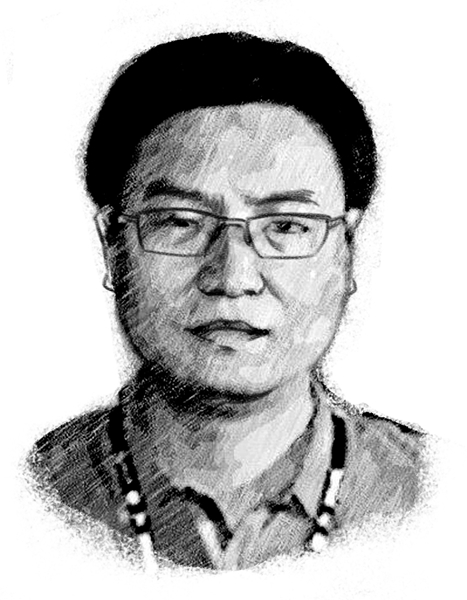
Zhang Haibin |
12. Will fundamental changes take place in global climate change governance after the Paris deal?
Zhang Haibin, a professor with Peking University
Yes. The historic agreement passed at the Paris climate change conference, along with the 2030 Agenda for Sustainable Development passed in the United Nations three months ago, finally made it official that development should be green and low-carbon by then. The 2030 Agenda for Sustainable Development, in particular, is a legally binding promise delivered by the global leaders from more than 190 countries, signaling significant improvement in transparency.
The Paris deal, meanwhile, will surely offer a boost to global confidence in dealing with worsening climate change, encouraging all parties to press ahead with the reform from the bottom up, not the other way round. Against the backdrop of a global economic downturn and the unpromising struggle against terrorism, it also serves as a silver lining that the international community is willing and able to coordinate.
China, which used to be a follower, now plays a bigger role in reform of global governance, as its capability and willingness to cooperate have increased in the past years. Yet, it is becoming clear that the developed economies have every intention of shirking their responsibilities, while fissures are widening among the developing countries.
For underdeveloped countries, especially some small island states, combating climate change is about their very survival; while for major developing countries, it is about their long-term growth. They should have worked together to urge the West to fulfill their responsibilities; unfortunately, the nations seeking survival along with the affluent nations are imposing more pressure on rising China and India.
This should not worry Beijing too much, though, as environmental protection has become a consensus of Chinese citizens, whose living conditions are facing graver environmental challenges, such as the frequent severe smog that swathes a large part of the country.
Private capital will be given wider access to the global climate governance, as the Paris deal indicates, signaling the long-awaited "climate justice" for all countries alike. Judging by its previous performance in fulfilling its international commitments, China will peak its carbon emissions years before 2030.

Copyright 1995 - . All rights reserved. The content (including but not limited to text, photo, multimedia information, etc) published in this site belongs to China Daily Information Co (CDIC). Without written authorization from CDIC, such content shall not be republished or used in any form. Note: Browsers with 1024*768 or higher resolution are suggested for this site.
License for publishing multimedia online 0108263 Registration Number: 130349