BEIJING - Loaded with 200 tons of cargo, a freight train leaving South China's Guangzhou today will arrive in Moscow 18 days later, having traveled more than 7,000 miles through Eurasia.
The trip is two weeks faster than the journey by sea via Hong Kong, winding along the eastern Chinese coast and around the Korean peninsula to Vladivostok and then by rail again to the Russian capital.
Another railway route, starting from nearby Dongguan, exits China from northwestern Xinjiang to Kazakhstan, connecting the world's manufacturing center with landlocked central Asia and on to Europe.
A consortium of Chinese and Russian companies have agreed on a contract worth around $380 million with Russian Railways on pre-construction surveys and design for a 770 km high-speed track linking Moscow and Kazan.
These lines, part of an ambitious initiative for regional integration, are bringing countries along routes new opportunities and hope, and will no doubt be the subject of much conversation at the upcoming Shanghai Cooperation Organization (SCO) prime ministers' meeting from Dec 14 to 15. China's neighbors have high hopes that the Belt and Road will help their slowing economies. If successful, the Belt and Road will become a trade, investment and infrastructure network that connects Asia with Europe and Africa.
Founded in 2001, the SCO consists of China, Russia, Kazakhstan, Kyrgyzstan, Tajikistan and Uzbekistan. It has potential new members in India and Pakistan. Iran and Mongolia are observers. These countries were major participants of the ancient silk trade, and almost all are developing nations.
Former Singaporean foreign affairs minister George Yeo Yong-Boon said Eurasia will become a major driver for global economic growth in coming decades and the connectivity the Belt and Road will bring could catalyze development.
Cooperation has not been limited to transportation. Kyrgyzstan relies on oil imports due to a lack of refining technology. It had an annual production capacity of 100,000 tons compared with demand for 2.5 million tons.
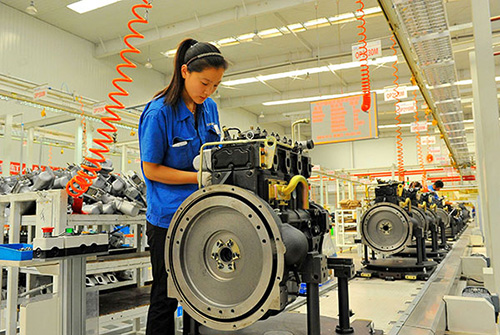
Since December 2014, with Chinese investment, a new refinery has provided one third of the oil the country needs and the taxes it renders are expected to yield one seventh of the national tax revenue. The project employs about 2,000 people, and there are plans to train another 1,000 local professionals over the next 10 years, according to Wang Jiulong of Trans-Asia Gas Pipeline, a major investor.
China also has agreements with Uzbekistan, Tajikistan and Kyrgyzstan on gas pipelines. In 2014, trade volume between China and the four central Asian SCO members hit $40 billion, a 13 percent increase year on year.

Copyright 1995 - . All rights reserved. The content (including but not limited to text, photo, multimedia information, etc) published in this site belongs to China Daily Information Co (CDIC). Without written authorization from CDIC, such content shall not be republished or used in any form. Note: Browsers with 1024*768 or higher resolution are suggested for this site.
License for publishing multimedia online 0108263 Registration Number: 130349