 |
|
Wang Xiaoying / China Daily |
Pan Jianzhong invested his own money into upgrading his family-run shoemaking business in 1992 to prove a point to his mother.
Concerned about the risks, Li Ailian, was unsure whether her son's plan to automate the Juyi Group would pay off. She was wrong as the 1 million yuan ($161,290) he pumped into the firm has produced bumper dividends.
"I believed the only way to increase the size of the company was to use machines to manufacture high quality products in a shorter space of time," Pan, general manager at Juyi Group, said.
"My mother is rather conservative and was afraid to take the risk of spending a large amount of cash on expensive machinery, so I had to invest my own money," he added. "She thought the cost would not lead to higher profits, but it has."
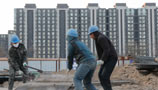
In the 1990s, the Juyi Group employed just a few hundred workers. Now, it has 5,000 staff at a factory in Wenzhou, a city in Zhejiang province, and manufactures 10 million pairs of shoes a year for overseas clients such as DHM, a leading retailer in Germany.
"The company now uses computer-guided stitching machines and laser printers that work 10 times faster than traditional handcrafting," Pan, who declined to reveal detailed financial figures for the privately-owned company, said. "We have continued to upgrade the factory."
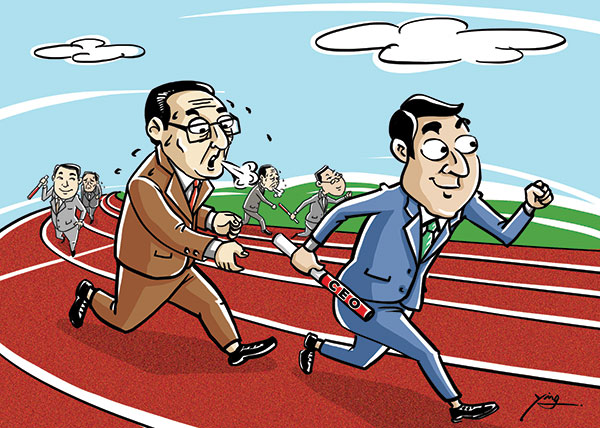
Family businesses, such as the one Pan runs, sprouted up in the 1980s when China opened its doors to the rest of the world. But now they are entering a new phase as the second generation takes over the reins.
According to a report by the All-China Federation of Industry and Commerce, 75 percent of these companies will be transformed through new technology in the next few years.
The old way of doing business is gradually changing even though it once generated vast profits. The 2015 Hurun Global Rich List showed that the combined net worth of Chinese billionaires is $1.2 trillion. The country has now more self-made billionaires that anywhere else in the world.
Jack Ma, founder of e-commerce giant Alibaba Group Holding Ltd, Wang Jianlin, chairman of property behemoth Dalian Wanda Group, and Zong Qinghou, the entrepreneur CEO of beverage company Hangzhou Wahaha Group, have turned China into a hotbed of privately-owned enterprises.
"Entrepreneurs in China have emerged alongside the nation's decision to open up," Zhang Weijiong, vice-president of the China Europe International Business School, said at the CEIBS China Family Heritage Forum 2015 last month. "Now most family businesses (that were started in the 1980s) are undergoing a succession process from the first to the second generation."
A smooth transition will be crucial to China's economy in the years ahead. Still, one of the biggest challenges the new generation of business leaders face is to convince their parents to change with the times and invest in high-tech manufacturing, which will increase the quality of their products.
Pan's story, in fact, is set to be played out across the country.

Copyright 1995 - . All rights reserved. The content (including but not limited to text, photo, multimedia information, etc) published in this site belongs to China Daily Information Co (CDIC). Without written authorization from CDIC, such content shall not be republished or used in any form. Note: Browsers with 1024*768 or higher resolution are suggested for this site.
License for publishing multimedia online 0108263 Registration Number: 130349