Move expected to stimulate shipments of minerals crucial to the technology sector
 |
|
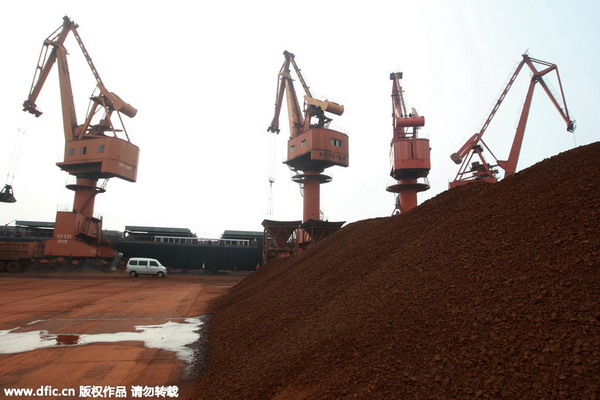
Rare earths at the Lianyungang Port, Jiangsu province,?are ready to be exported to Japan. [Photo / IC] |
Export duties on rare earths will be eliminated on May 1, the Ministry of Finance said in a statement on Thursday, a move that analysts said would stimulate China's exports of the limited resource.
Rare earths-a group of minerals that are crucial to the technology and defense industries-as well as tungsten and molybdenum will be exempt from tariffs, and wrought aluminum products will also enjoy a zero rate, the statement said.
The move, according to Du Shuaibing, an analyst at natural resources consultancy Baichuan Information, will reduce the prices of rare earths by 20 to 25 percent.
"Rare earth export volumes are expected to increase greatly, which will help producers digest inventories," said Du.
The move also will also have an impact on international rare earth prices, because lower-priced exports from China will affect sales of rare earths produced in other countries and regions.
The metals are used in products as varied as iPhones and wind turbines.
In 2014, rare earth exports reached 28,000 metric tons, up 27.3 percent from a year earlier. The average export price was 83,000 yuan ($13,300) per metric ton, down 47.8 percent.
But Du said that resource and environmental taxes on rare earth producers, which have caused production costs and therefore prices to rise, are still the primary concern in the market.
It is also crucial to crack down on illegal mining and smuggling, factors that lead to an oversupply, Du said.
China's six major rare earth groups, which dominate exports, are expected to complete most of the work necessary to integrate small mines and smelting companies by the end of 2015.
China is the world's largest producer and exporter of the minerals, but the industry is beset by problems including illegal mining, smuggling and a lack of competitiveness due to weak research and development.
The country raised tariffs and imposed strict output quotas in 2010 to not only protect its scarce resources, but also reduce the environmental impact of extraction. Importers in Japan, Europe and the United States complained that the move had breached trade rules.
Shares in producers of rare earths surged on Thursday after the duty change was announced. But Du said that participants in the industry will take a more measured view of policy changes.
Key movements for the industry
Before 2003: Exports are encouraged with rebates
2003-06: Exports are restricted, with rebates phased out
2006-14: Ceilings on exports are raised, export tariffs hiked annually
Jan 1, 2015: Tariff implementation plan enforced

Copyright 1995 - . All rights reserved. The content (including but not limited to text, photo, multimedia information, etc) published in this site belongs to China Daily Information Co (CDIC). Without written authorization from CDIC, such content shall not be republished or used in any form. Note: Browsers with 1024*768 or higher resolution are suggested for this site.
License for publishing multimedia online 0108263 Registration Number: 130349