With President Xi Jinping's arrival to power, many international investors are excited about the prospect of economic rebalancing. They were impressed by Xi's open recognition that China's State-led stimulus plan of 2008 was like an adrenalin shock. It was necessary to rejuvenate the patient, but it had severe negative side effects: overcapacity in many sectors; an excessive real estate boom; environmental degradation; increased inequality; a worrying rise in local government and corporate debt, and an emerging shadow banking system.
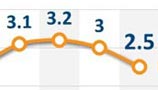
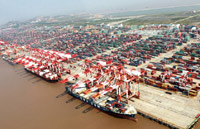
Many commentators in the West say China's rebalancing should be measured by its capacity to move from an export and investment-led growth model to one based on consumption-led growth. The ultimate yardstick should not only be a reduction in the trade surplus (which has gone from 10 percent in 2007 to just over 2 percent in 2014) but to see China loosen its domestic finance grip so that the Chinese consumer can be the driving force of the economy.
Therefore, these are the reforms that the Chinese leadership should undertake: liberalize the financial sector; let the renminbi float; open the capital account and unleash market forces in every sector of the economy.
Those waiting for this to happen soon would be disappointed. China is rebalancing but on its own terms and at its own pace. A further marketization of the economy will be developed the traditional Chinese way based on gradual experimentation. On paper, China will soon have a completely marketized pricing mechanism for resources in key sectors such as water, oil, natural gas, power, transportation and telecommunications, as envisioned in the Third Plenum in November 2013, but liberalizing the pricing system does not imply the creation of a competitive free market. This is especially the case in the financial sector, which ultimately is the lifeblood of the Chinese economy and hence the conductor of its development strategy.
The Chinese government has already introduced some important reforms in this sector. It has tolerated the shadow banking system, in which deposit and loan rates are set freely by market actors. This could be seen as another Chinese experiment in dual-track pricing like the one used in the agriculture sector in the 1980s. Furthermore, the daily floating band of the yuan against the dollar has been widened to 2 percent. The capital account has also been progressively opened with new foreign and domestic international investment schemes. There is also excitement in international markets about the Shanghai-Hong Kong Stock Connect program, yet another step toward Beijing's ambition to make Shanghai a global financial hub.
However, the fact is that China's development model is based on a number of institutional complementarities. If one of these parts is taken away, the whole structure becomes fragile. Financial repression acts as an umbilical cord between the Chinese saver, State-owned banks, State-owned enterprises and the government that make sure the savings are used to invest in the longterm development of the country. Naturally, this strategy creates perverse incentives. It generates corruption and overcapacity, and encourages sophisticated savers to put their money either in real estate or in the shadow banking system, which offers higher returns. This has accelerated the indebtedness of the country from 147 percent in 2008 to 251 percent of GDP in 2014.
There is a pervasive moral hazard in China because investors know that the State is behind most of the local government and corporate debtors. The State, for its part, by controlling the credit circuit (including great parts of the shadow banking system) and the other key levers of the economy, knows that it has the capacity, as it did in the early 2000s, to restructure the debt overhang in a politically and socially less-disruptive way than in Western economies. Of course, the Party is also aware that this capacity would weaken if more private and foreign capital enters the mainstream credit circuit of the economy. This is the reason that China remains a strong net external creditor.
It is important to understand China's developmental model. With a GDP per capita at slightly under $7,000, and just over 50 percent of the population living in urban areas (this share is around 80 percent in the United States and Europe), for a great number of Chinese economists China needs to continue to rely on gross capital formation in order to continue to develop upon solid industrial and technological pillars. From this point of view, it would be a mistake to divert the national savings too swiftly toward private consumption. Thus, China needs to continue to invest. It just needs to invest better.
Services and consumption will gradually represent a larger part of China's GDP, but to undertake this transformation on solid ground the Chinese leadership is convinced that it still needs to develop its infrastructural, industrial, institutional, and technological capabilities. Only by doing so will it enhance the productivity of the Chinese worker to produce the higher-added-value goods and services that are necessary to generate higher wages, consumption capacity and the modern tax system necessary to fund key public services.
The author is senior analyst at the Elcano Royal Institute and associate researcher at the EU-Asia Institute at ESSCA School of Management in France. The views do not necessarily reflect those of China Daily.

Copyright 1995 - . All rights reserved. The content (including but not limited to text, photo, multimedia information, etc) published in this site belongs to China Daily Information Co (CDIC). Without written authorization from CDIC, such content shall not be republished or used in any form. Note: Browsers with 1024*768 or higher resolution are suggested for this site.
License for publishing multimedia online 0108263 Registration Number: 130349