 |
|
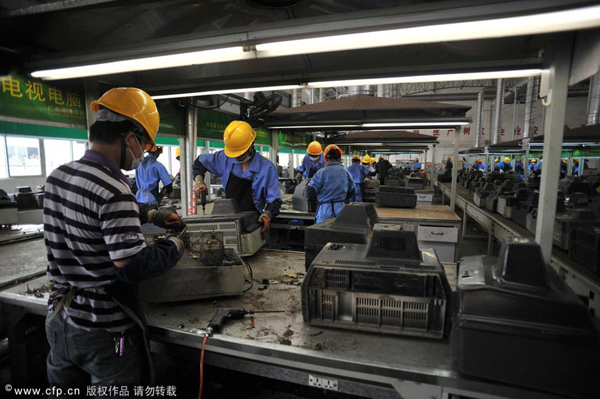
At the largest whiteware recycling plant in Qingyuan, Guangdong province, July 14, 2014, workers can recycle over 6,000 old television sets with the assistance of automated equipment. [Photo/CFP] |
China is playing a significant role in reducing the world's carbon footprint since it became the biggest importer of recycled materials, used extensively in the country's rapid infrastructure construction. Also, improvements in China's recycling industry regulations have helped to improve the standards of recycling globally.
"China's growing economy has created great demand for scrap materials, and the use of scrap instead of primary materials reduces carbon emissions. Although China's economic growth has slowed, it is still playing an important role," says Alexandre Delacoux, director-general of the Brussels-headquartered Bureau of International Recycling.
With members from more than 70 countries, the bureau works to encourage best industrial practices in recycling so that the environmental impact of economic development is kept to a minimum.
According to 2008 research conducted by the bureau, the total estimated savings in carbon dioxide emissions obtained through recycling globally is approximately 500 million tons of carbon dioxide. Common recyclable materials include metals, paper and plastics.
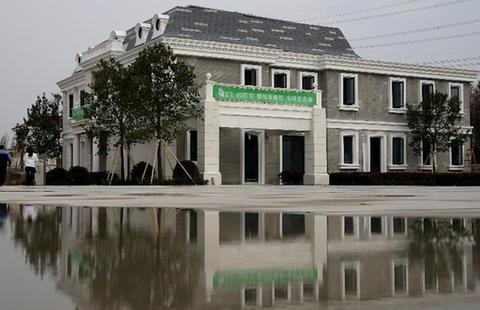
As China grows, much of its construction work is done using a lot of scrap metals no longer needed in other countries. Such material comes at a cheaper cost than new material, and it helps to reduce global carbon emissions.
For example, using recycled paper can save about 75 percent of the energy needed to make new paper from virgin fiber. It can also reduce 35 percent of the water pollution and 74 percent of the air pollution caused in making new paper. Meanwhile, using ferrous scrap metals can save carbon dioxide emissions by 58 percent compared with primary ore, according to the bureau.
The recycling organization has more than 30 members from China, from cities such as Beijing, Hong Kong and Shanghai.
Delacoux says one significant change his team has witnessed in recent years is the improvement in the quality of China's recycling practices, a result of the joint efforts of the Chinese government and companies.
One key policy that has changed China's recycling industry is China's Green Fence policy. Started in February 2013, it was designed to prevent the imports of solid waste-contaminated shipments.

Copyright 1995 - . All rights reserved. The content (including but not limited to text, photo, multimedia information, etc) published in this site belongs to China Daily Information Co (CDIC). Without written authorization from CDIC, such content shall not be republished or used in any form. Note: Browsers with 1024*768 or higher resolution are suggested for this site.
License for publishing multimedia online 0108263 Registration Number: 130349