 |
|
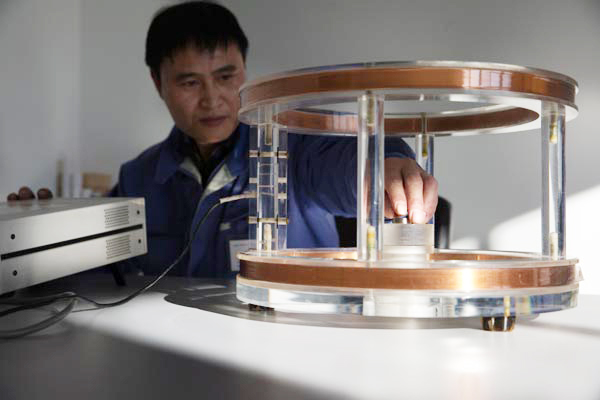
Rare earths products being tested by a scientist at a high-tech company in Beijing. China has ended its quota system previously aimed at restricting exports of rare earths. [Photo/Xinhua] |
China has ended a quota system previously aimed at restricting exports of rare earths, a move in line with a World Trade Organization panel ruling last March.
The Ministry of Commerce issued a notice at the end of December that abolished export quotas for rare earths, key elements in defence industry components and modern technology ranging from iPhones to wind turbines. The abolished export quotas also include tungsten, molybdenum and fluorspar.
Chen Zhanheng, deputy secretary-general of the China Rare Earths Industry Association, said the removal of the quota system is expected to increase the number of exporting companies and that competition for exports will become fiercer, which in turn is likely to push up the price of the rare earths after prices hit rock bottom last year.
Chen said previously there were 28 rare earths producers working under the export quotas. Now any company with export contract is eligible to export.
Du Shuaibing, an analyst at natural resources consultancy Baichuan Information, however, said he thinks the removal will have little impact on the market as the export quota system had been "invisible" in recent years in any case, since actual export volumes fell short of the quotas.
He said the major impact will come when a tariff of 15 to 25 percent is expected to be removed in May.
Chen predicts the tariff will be lifted by June resulting in price competition across the global rare earths market as Chinese export prices lower.
China produces more than 90 percent of global rare earths, effectively giving it control of supply of a group of key elements used in sectors such as defence and renewable energy.
The country raised tariffs and imposed strict quotas in 2010 to not only protect its scarce resources but also reduce the environmental impact of their extraction, but importers in Japan, Europe and the United States complained that the move breached trade rules.
China was widely expected to abolish the quota system and replace it with resource and environmental taxes following the WTO ruling in March last year.
The government has said it sought to improve China's pricing power over rare earths by imposing strict domestic production caps and cracking down on illegal production and smuggling.
It has also raised environmental and production standards and encouraged big State-owned firms to integrate with smaller producers.

Copyright 1995 - . All rights reserved. The content (including but not limited to text, photo, multimedia information, etc) published in this site belongs to China Daily Information Co (CDIC). Without written authorization from CDIC, such content shall not be republished or used in any form. Note: Browsers with 1024*768 or higher resolution are suggested for this site.
License for publishing multimedia online 0108263 Registration Number: 130349