 |
|
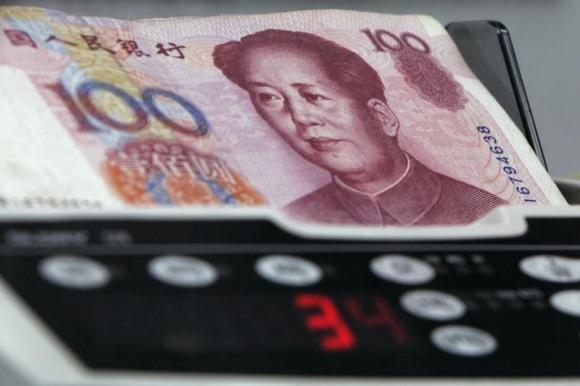
Yuan banknotes are counted at a currency exchange store in Hong Kong Jan 11, 2007.[Photo/Agencies] |
A month after Chinese mainland opened up its equity markets in a landmark trading link with Hong Kong, demand has been subdued and the bulk of activity has come from short-term speculative investors.
The authorities had hoped mutual and pension funds and private banks would form the bedrock of the Shanghai-Hong Kong stock connect. But early trade volumes in the program launched in mid-November were completely dominated by hedge funds and banks' proprietary trading desks, according to five traders at some of the biggest brokerages participating in the program.
Market players say it could take months for long-term investors to eventually trickle into the program, as they devise ways to cope with its peculiarities.
"We are not participating in the program yet because of the operational issues that have yet to be resolved and we prefer to access the mainland markets via exchange traded funds," Robert Cormie, Asia CEO of BMO Private Bank, told Reuters.
Edmund Yun, executive director of investment at the same wealth management firm, agreed, citing a number of prohibitive issues. These include beneficial ownership, tax and trading settlement.
Hedge funds use banks' prime brokerages, which help them more deftly manage those regulatory constraints. Stock portfolios of hedge funds are often held by the prime brokers themselves to facilitate quick trading decisions so they are unaffected by ownership constraints.
For example, under the program, funds wanting to sell holdings of Shanghai-listed shares have to deliver the shares to brokers a day before they are to be sold, a peculiarity that exists in no other major stock market.
While regulators have looked for ways to encourage long-term funds, including fast-tracking applications for products benchmarked under the stock connect program, industry officials say that persuading pension funds to participate could take months.
Under the program, the daily limit on investment bound for Shanghai is 13 billion yuan ($2.1 billion) and for Hong Kong-bound investment it is 10.5 billion yuan.Typically, only a small portion of this has been used, and on Monday of last week, just 10 percent of the combined 23.5 billion yuan quota was used, the lowest level since the launch of the stock connect program.
Slim pickings
Brokers that offer a combination of services, such as major banks HSBC Holdings, Standard Chartered Plc, BNP Paribas and Citibank CN, were expected to win the most market share under the program. But the regulatory uncertainty has limited their capacity to dominate flows.
Banks with private wealth clients, such as UBS and those with extensive hedge fund networks, such as Goldman Sachs, Credit Suisse and CLSA, have grabbed early market share, traders said.
That has been helped by a nearly 25 percent rise in the Shanghai Composite Index since the program was launched as hedge funds have found it cheaper to buy mainland shares under the program than "rent quotas" from investment banks, a mechanism under which investors buy derivative products from banks who have access to onshore stocks.
More worryingly for the Hong Kong Stock Exchange, the slower than expected take-up of quotas under the program means revenues are unlikely to get a big boost, two traders said.
While the Shanghai-bound flows were heavier early on, Hong Kong-bound flows have disappointed from the start, a sales equity trader with a European bank said, as participation has been limited by stringent eligibility requirements.
A CLSA survey of Chinese investors found 90 percent willing to invest in the Hong Kong market. That dropped to 20 percent, however, when a minimum investment amount of 500,000 yuan ($80,405) which the program currently requires, is applied.
The Hong Kong stock market has also fallen more than 5 percent since the launch, reducing demand for the territory's shares.
Despite the slow take-up, investors are hopeful an MSCI review in the first half next year may earmark a bigger share of mainland equities to its emerging market indexes now that one of the biggest stumbling blocks to a larger presence on the MSCI index has been eased - investor access to Chinese stocks.
Until then, participation from long-term investors is expected to grow but slowly.
"We expect more participation from the long-only funds in the coming months," said Nick Ronalds, head of equities at Asia Securities Industry & Financial Markets Association.

Copyright 1995 - . All rights reserved. The content (including but not limited to text, photo, multimedia information, etc) published in this site belongs to China Daily Information Co (CDIC). Without written authorization from CDIC, such content shall not be republished or used in any form. Note: Browsers with 1024*768 or higher resolution are suggested for this site.
License for publishing multimedia online 0108263 Registration Number: 130349