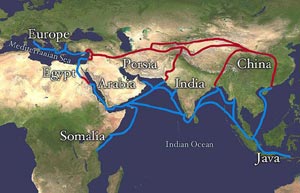
For centuries, the historic maritime route enabled the trading of Chinese silk, ceramics, tea and spices, but it works well for the tourism industry, particularly if the countries involved facilitate links.
 |
 |
In terms of tourism, an obvious beneficiary would be seaborne travel.
"When it comes to the Maritime Silk Road, what I think is interesting is that we see a very strong business in Europe from the cruise business," said David Baxby, CEO of Global Blue, a Swiss-based shopping company that specializes in the processing of tax-free spending by overseas visitors.
Baxby was speaking during the forum as a member of a panel sponsored by China Daily.
A second benefit of raising the profile of the MSR would be a boost in the already rapidly growing Chinese outbound market. Improving the routes and facilitating access could entice more Chinese tourists to travel abroad.
"(The MSR) is going to connect a lot of the emerging markets. It will propel tourism in a huge way. It will connect markets that are off the beaten path and may not be known in a huge way," said Abid Butt, CEO of Banyan Tree Hotels and Resorts, an international luxury group. "This initiative would only help us get more traction in emerging markets."
"People do want to enrich themselves through unique experiences and cultural experiences," he said, noting that tourism "is a catalyst in removing barriers around the world and we need to take advantage of that".
The rapidly growing participation of emerging market tourists is forcing the global tourism industry to adapt. Nowhere in the world is outbound tourism growing as fast as in the Asia-Pacific region, led by China.
The UNWTO says China's 98 million outbound tourists in 2013 spent $129 billion around the world. The Asia-Pacific region recorded the fastest growth in tourism of any region in the world, at 6 percent.
Even after four years of robust growth, only two Asia-Pacific destinations are among the top 10 in terms of international arrivals: China and Thailand. France remains the most popular destination for tourists to visit, followed by the United States and Spain.
Asian destinations are doing better in terms of receipts from tourism, with the Chinese mainland, Macao, Thailand and Hong Kong all in the top 10 by this measure. For both industry and governments, however, this is not enough.
To attract more travelers and get them to spend more, better infrastructure and more comprehensive services are needed.
"We need collaboration between the government and the private sector - an investment-friendly policy," said Edmond Ip, vice-chairman of the Artyzen Hospitality Group, a hotel management company that is part of Hong Kong-based Shun Tak Holdings.

Copyright 1995 - . All rights reserved. The content (including but not limited to text, photo, multimedia information, etc) published in this site belongs to China Daily Information Co (CDIC). Without written authorization from CDIC, such content shall not be republished or used in any form. Note: Browsers with 1024*768 or higher resolution are suggested for this site.
License for publishing multimedia online 0108263 Registration Number: 130349