The overwhelming impression during a drive past the glass towers of Chengdu's business district, or a visit to one of its vast technology parks, is of a place completely in tune with the contemporary world.
However, it is also a historic city, and though the traditional Chengdu may not be immediately obvious amid the ultramodern urban landscape, there are some old sites that are well worth seeking out.
Chengdu was founded 2,300 years ago, but the history of civilization in the area goes back even further. The bronze-age Shu Kingdom built a city at Jinsha, now a suburb of Chengdu, 3,000 years ago.
The site was unknown until 2001, when it was discovered by chance. Contractors carrying out excavation work for a sewage system for a new development came across some ancient remains, and subsequent excavations by archaeologists uncovered a vast treasure trove of artifacts.
They include a disc of gold foil measuring 12.5 cm across and just 0.2 mm thick, with cut-out shapes of the sun and four birds. The beautiful design has become an official symbol of China's cultural heritage, and can be seen on buildings across the country.
The remarkable object was nearly missed by archaeologists digging at the site as, over the millennia, it had become rolled up into a small ball.
The golden sunbird is just one of thousands of items uncovered, and it and many others are on display at the purpose-built Jinsha Site Museum. They include other gold objects, exquisite bronze pieces and works made of jade.
The weird, striking designs and remarkable level of craftsmanship make this an outstanding display. The artifacts would cause a sensation if they went on show in a European capital or US city.
A large area that was excavated by archaeologists is open to visitors, who can see where the most important objects were found. However, this section – known as the sacrificial area – was just one of a number of districts in the ancient city.
Much remains unexplored, leaving the tantalizing possibility of further remarkable discoveries being made in the future.
After taking in the wonders of Jinsha, visitors can unwind in Chengdu's ancient streets at the Kuanzhai conservation area. Traditional buildings in three parallel alleys, some dating from the Qing Dynasty (1644-1911), have been restored and turned into shops, bars and restaurants, creating a lively, buzzing tourism and entertainment district.
A third site worth visiting is the Dujiangyan Irrigation Project. A huge manmade channel built in 256 BC diverts water from the Min River and sends it on its way to Chengdu, which lies more than 50 km away. The design of the system automatically supplies a larger proportion of the river’s water to the city when the level is low, and prevents flooding when it is high. Chengdu's prosperity through the centuries has relied on this bountiful supply.
The system remains in perfect working order, and it provides Chengdu — which has a population of 14 million — with 80 per cent of the water it consumes.
As well as providing water for agricultural irrigation, the system also delivers tapwater and supplies many of Chengdu's cutting-edge manufacturing plants.
The fact that modern factories receive water from this ancient source perfectly expresses the interconnection of old and new in Chengdu.
 |
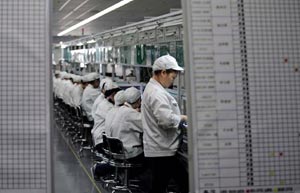 |
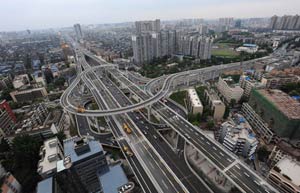
| Chengdu tops in business environment ranking | High-tech park growing local innovation |

Copyright 1995 - . All rights reserved. The content (including but not limited to text, photo, multimedia information, etc) published in this site belongs to China Daily Information Co (CDIC). Without written authorization from CDIC, such content shall not be republished or used in any form. Note: Browsers with 1024*768 or higher resolution are suggested for this site.
License for publishing multimedia online 0108263 Registration Number: 20100000002731