The establishment of market value management and equity incentive mechanisms will be an effective step toward addressing such malpractices. Only when top management personnel really care about the prices of shares, can they possibly steer the development of their companies in a direction that accords with the interests of ordinary shareholders.
The guideline vows to continue pushing ahead with a registration-based IPO system that stresses accurate and timely information disclosure by public companies, and developing a multilayered equity market with a more complete share transfer system for small and medium-sized enterprises.
|
 |
 |
In a move to curb risks, the document promises to lift the scale of direct financing. Statistics show that direct financing only accounted for 42.3 percent of the country's total financing volume by the end of 2012, much lower than the 87.2 percent in the United States and 74.4 percent in Japan, and even far behind the 66.7 percent in India and 66.3 percent in Indonesia. An imbalanced direct and indirect financing structure has caused a high concentration of China's financial risks in the banking sector and increased the difficulty and the cost of seeking capital to develop the real economy.
At the same time, the new guideline vows to set up a marketized and diversified delisting regime that conforms to China's concrete conditions and helps protect the interests of investors, and work hard for its strict implementation.
A delisting and accountability mechanism was also contained in the old guideline, but such a stipulation has not been really implemented. That is because many listed companies suffering losses were allowed to be listed due to historical factors and there are concerns that their forced delisting may cause strong discontent among ordinary shareholders.
Compared with the old one, the delisting mechanism promised by the new guideline is more operable, given that it targets new companies. A forced exit will produce strong deterrence to candidates harboring an intention to get listed through financial fraud or other malpractices and will effectively boost the credibility of China's capital market.
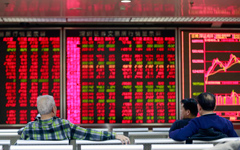
The promulgation of the latest guideline, which is mainly aimed at addressing some deep-rooted problems and malpractices underlying China's stock market recession, such as its unreasonable financing structure and the high leverage issue among domestic enterprises, is expected to have far-reaching influence on the country's capital market.
The author is a researcher with the Institute of Finance and Banking, Chinese Academy of Social Sciences.

Copyright 1995 - . All rights reserved. The content (including but not limited to text, photo, multimedia information, etc) published in this site belongs to China Daily Information Co (CDIC). Without written authorization from CDIC, such content shall not be republished or used in any form. Note: Browsers with 1024*768 or higher resolution are suggested for this site.
License for publishing multimedia online 0108263 Registration Number: 20100000002731