Critics have pointed to the risk that Chinese infrastructure is making African countries vulnerable by concentrating their exports on China. Some have expressed concern about the nature and quality of Chinese-built infrastructure, and have noted that some Chinese companies in African countries such as Angola, Uganda, and Zambia have been found wanting in terms of using local employees and managers, respecting the environment, and adhering to corporate social responsibility norms. Another area drawing attention is the transparency of China's activities and their effect on good governance.
 |
 |
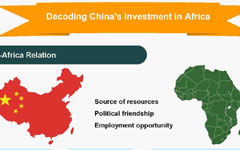
Looking at the issue of Chinese infrastructure locking African countries into the China market, this is not borne out by the diversity of the destinations for the host country's exports and the fact that Chinese-built infrastructure often serves the domestic intra- and inter-city economic needs of host countries as well as regional economic integration. Regarding the nature and quality of Chinese infrastructure, there are problems in a few instances, but the vast majority of infrastructure serves its intended purposes and is substantive, far beyond the construction of presidential palaces and soccer stadiums that critics are fond of highlighting.
Regarding the behavior of Chinese companies in Africa, the need for efficiencies, market access and knowledge, and better local brand images, are driving them to improve their practices. The Chinese government, though, understands this is not enough and it regularly encourages Chinese companies to do more to bolster local employment, respect local laws and the environment, and be good corporate citizens. As for the effect of Chinese activities on good governance in Africa, there is little evidence to support the claim. Good governance is largely dependent on what the local governments and peoples do.
China's involvement in Africa is not the neocolonial assault that critics claim. But as Premier Li has acknowledged there have been some "growing pains". Going forward, the Chinese government will need to continue to find ways to ensure that Chinese companies in Africa not only work well, but also do well. In addition, it will need to continue to be responsive to employment, environment, financial, technological, and requirements of individual African countries and the continent as a whole. This will help to ensure that the China-Africa relationship matures in a healthy direction and yields the win-win results that are so often touted by all.
The author is assistant dean of the School of International and Public Affairs, Shanghai Jiao Tong University, and Executive Director of the Center for the Study of Multinational Corporations.

Copyright 1995 - . All rights reserved. The content (including but not limited to text, photo, multimedia information, etc) published in this site belongs to China Daily Information Co (CDIC). Without written authorization from CDIC, such content shall not be republished or used in any form. Note: Browsers with 1024*768 or higher resolution are suggested for this site.
License for publishing multimedia online 0108263 Registration Number: 20100000002731