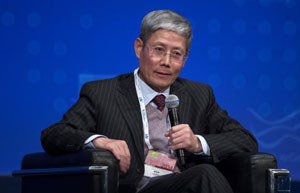
BEIJING -- Some say that the "golden days" for foreign companies operating in China are over. But Jeffrey Towson, co-author of the "The One-Hour China Book," believes the Chinese market still has appeal.
"The days of easy competition are over. The second wave may have been more profitable. But I think the competition is a lot more difficult," he told Xinhua in an exclusive interview.
He said compared with previous years, local regulations are now clearer and consumers are buying more.
"In the past, people had market share but they didn't make much money. Now they're starting to make money and the system is in some ways easier to navigate," said the Peking University professor and private equity investor.
Towson co-wrote "The One-Hour China Book" with Jonathan Woetzel. The best-selling "speed-read" book introduces trends that are shaping today's China.
Competition between foreign and local companies may intensify, as the latter are spending more funding on research and development, as well as becoming more innovative.
Towson named the Chinese telecommunications giant Huawei as an example. According to the company's 2012 Corporate Sustainability Report, it had about 150,000 employees, of which 45.36 percent were working in R&D.
"That's a lot of people. That combination of huge manufacturing scale plus increasing brainpower, that's pretty daunting," he said.
Foreign entrepreneurs have worries about government intervention in the market. But Towson said their concerns may be misplaced. "It's not gonna determine your success and most things. It's the competition that's your biggest worry," he said.
He noted that in some areas like telecommunications, the government will play a bigger role. "But in most industries, like restaurants and online services, it's not gonna be a big factor."
Having invested in multiple countries, Towson confessed that "the interception of the government in business is the norm, not just in China, but also in Africa, a lot of parts of Europe, and a lot of sectors in the US It doesn't strike me as anything terribly unusual."
Chinese Internet companies have been growing rapidly, with both innovative products and well-known entrepreneurs increasing in number. Towson said e-commerce is "the next really big thing in China."
Online marketplaces Tmall and Taobao, both owned by the Alibaba Group, saw transactions totaling 35 billion yuan ($5.68 billion) during the so-called "Double-11 Shopping Spree" which took place on Nov. 11 last year
Towson said he thinks highly of Jack Ma, the executive chairman and the lead founder of the Alibaba Group.
 |
 |

Copyright 1995 - . All rights reserved. The content (including but not limited to text, photo, multimedia information, etc) published in this site belongs to China Daily Information Co (CDIC). Without written authorization from CDIC, such content shall not be republished or used in any form. Note: Browsers with 1024*768 or higher resolution are suggested for this site.
License for publishing multimedia online 0108263 Registration Number: 20100000002731