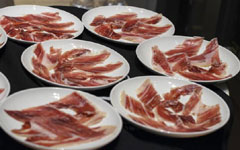
Pork is an important part of the Chinese diet and economy and is likely to remain so in the foreseeable future given the increasing demand for meat because of rising incomes and urbanization. As the largest producer and consumer of pork, China accounts for half of the world's pork production and consumption.
In the coming decade, China's total pork production and consumption is projected to increase by a little over 20 percent based on new figures from the United States Department of Agriculture. While the increasing appetite for other meats, especially poultry, in China is expected to slow down the growth in pork consumption, its dominant position in the Chinese diet will remain intact for some time to come. In per person terms, the consumption of pork is projected to rise three times more than that of poultry and seven times more than that of beef.
|
 |
 |
Since 2007, government policy has favored large-scale pig production as a way of improving food safety and quality by providing grants and subsidies to large pig farms. These policies need to be re-evaluated. Many of these changes have led to increasing volatility of supply and prices in China's pork industry.
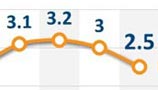
In the last few years, rising pork prices have been a major driver of food inflation in the country. But now a declining price trend has begun to emerge. Based on official data, pork prices in March 2014 fell by close to 7 percent year-on-year, though food price inflation rose by about 4 percent. The recent fall in prices has been widely attributed to consolidation in China's pork industry leading to cycles of rapid expansion in pork production. This periodic excess supply of pork can lead to a vicious cycle of reduced employment, production and profitability in the industry.
The transition from small to large pig farms should be a natural economic process. Small farms still have an important role to play in stabilizing China's pork production, and equally importantly in providing employment and income for many poor people in rural areas who will not be able to move out of the agricultural sector, at least not in the near future. This is especially true of farms in the central and western regions of China.

Copyright 1995 - . All rights reserved. The content (including but not limited to text, photo, multimedia information, etc) published in this site belongs to China Daily Information Co (CDIC). Without written authorization from CDIC, such content shall not be republished or used in any form. Note: Browsers with 1024*768 or higher resolution are suggested for this site.
License for publishing multimedia online 0108263 Registration Number: 20100000002731