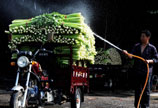
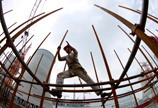
The Chinese authorities are well aware of these issues and have announced plans for a new model of urbanization, "people-oriented" urbanization. The World Bank and the Development Research Center of China's State Council (the country's cabinet) have just issued a joint report on how such a new model - more efficient, inclusive and environmentally sustainable urbanization - can become reality. If implemented, China's next phase of urbanization can make a big difference to its urban and rural poor.
|
 |
|
 |
Land reforms can also improve the distribution of income and wealth, because rural land prices are likely to rise with stronger property rights. One estimate is that the total compensation that farmers received on their land in the past 20 years was about 2 trillion yuan ($321.34 billion) below market value, or 4 percent of China's GDP in 2013. If this money had made a return equal to China's growth rate, it would now add up to 5 trillion yuan, or almost 10 percent of GDP.
Second, by reforming the hukou system, China could increase productivity of its labor force, accelerate urbanization and reduce income inequality. Despite rapid urbanization, China's urban population is still lower than the country's development level would suggest. Moreover, one-third of city dwellers do not have urban hukou, and they and their families have limited access to public services. The hukou system effectively discourages migration to cities, holding back China's transformation and keeping too many people working the land in agriculture, which keeps agricultural labor productivity and wages low.

Copyright 1995 - . All rights reserved. The content (including but not limited to text, photo, multimedia information, etc) published in this site belongs to China Daily Information Co (CDIC). Without written authorization from CDIC, such content shall not be republished or used in any form. Note: Browsers with 1024*768 or higher resolution are suggested for this site.
License for publishing multimedia online 0108263 Registration Number: 20100000002731