Never have economists been so polarized in their views about China.
Since the beginning of the year, many of them have been talking about the country's coming Minsky moment, or a sudden collapse in the value of assets. Others are ruling out that possibility.
Some say government stimulus, like the one in late 2008, led by the central government's 4 trillion yuan ($650 billion) commitment, would benefit the economy. Others say it wouldn't.
The market has been all the more divided since a new government investment program was announced at a State Council executive meeting in the first week of April.
|
 |
|
 |
Others criticized it as a sign of Beijing succumbing to the local governments' pestering for easy credit, and of the leaders abandoning their commitment to reform.
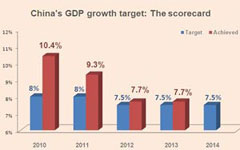
However, all signs in Beijing suggest that China can neither expect to boost its growth rate to the pre-2008 level nor, because of its financial health, dole out large amounts of credit to struggling industries, as it did after 2008.
There isn't as much demand, both at home and abroad, for the country's already excessive manufacturing capacity. There is no point in using financial stimulus to build still more of the same capacity and to produce still more of the same goods, as an article by Cai Fang, one of China's leading economists and demographers, recently pointed out.
This is where the recently announced mini-stimulus is different from the 4 trillion yuan stimulus plan launched at the end of 2008. The bigger previous stimulus was designed to primarily bail out large State-owned enterprises, some of which even used some of the easy credit they received to relend it to smaller companies to earn interest. Many small enterprises were denied any benefit from what was meant to be an anti-crisis contingency package and were squeezed out of the market instead.
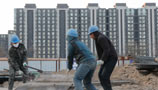
In contrast, the mini-stimulus of 2014 contains no favors for SOEs. It consists of three main components - building more housing units for the urban poor, cutting back taxes on small and micro enterprises and committing additional investment to building railways while speeding up financial reform in that industry.

Copyright 1995 - . All rights reserved. The content (including but not limited to text, photo, multimedia information, etc) published in this site belongs to China Daily Information Co (CDIC). Without written authorization from CDIC, such content shall not be republished or used in any form. Note: Browsers with 1024*768 or higher resolution are suggested for this site.
License for publishing multimedia online 0108263 Registration Number: 20100000002731