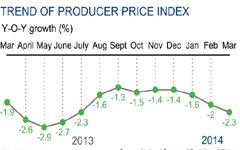
The PPI, which measures inflation at wholesale level, has been in deflationary territory for 25 consecutive months, the longest drop since the 1990s.
The PPI contraction showed that demand for industrial products remained weak, and a risk of deflation was likely to emerge, Liu Ligang, chief China economist at the ANZ Banking Group, said in a research note.
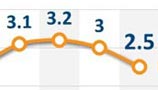
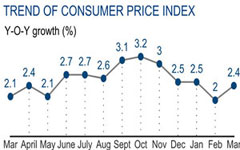
The latest CPI and PPI data was largely in line with market expectations, and the CPI increase remained well below the 3.5-percent target set by the government for this year.
 |
 |
 |
"We do not expect the government to roll out new easing measures in April, as it will likely wait to see how the fiscal easing measures announced over the past several weeks affect the economy," Zhang said in a research note.
A set of economic data released since the beginning of the year has pointed to a further slowing in the Chinese economy.
"We expect growth to slow in the second quarter partly due to weak momentum in the property sector, and the government will likely have to ease policies further, particularly on the monetary side. We continue to expect an reserve requirement ratio (RRR) cut of 50 basis points in the second quarter, likely in late May or June when weak activity data becomes available," Zhang said.
China's loan interest rates remained high in the first quarter, and the central bank can take measures including cutting the reserve requirement ratio to help businesses reduce financing cost, Liu added.
Low inflationary pressure normally gives policymakers more room to take policy action to support economic growth, as fiscal or monetary easing may bolster demand and push up inflation.
The RRR sets the minimum fraction of customer deposits that each commercial bank must hold as reserves rather than lending, and is an important monetary tool used by central banks including the PBOC. Lowering the RRR is often aimed at stimulating bank lending and economic growth.
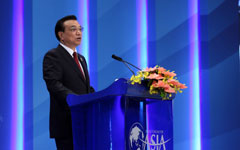
However, Premier Li Keqiang said at the opening ceremony of the BFA conference on Thursday that China will not resort to short-term stimulus policies just because of temporary economic fluctuations and that the country will pay more attention to sound development in the medium and long run.

Copyright 1995 - . All rights reserved. The content (including but not limited to text, photo, multimedia information, etc) published in this site belongs to China Daily Information Co (CDIC). Without written authorization from CDIC, such content shall not be republished or used in any form. Note: Browsers with 1024*768 or higher resolution are suggested for this site.
License for publishing multimedia online 0108263 Registration Number: 20100000002731