The government will push forward further reforms and opening-up to release the potential for economic growth
The central government has made consistent efforts to enforce its well-conceived reform and development roadmap, but the recent gloomy economic data has fuelled suspicions that the government might slow its reform drive and launch a new stimulus package to boost the slowed economy.
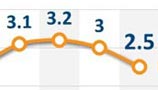
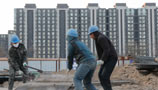
China has seen a tangible decline in its industrial production and investment growth in recent months, and its export growth has also slackened. The country's gross domestic product is expected to slow to 7.4 percent in the first quarter, slightly lower than the yearly 7.5 percent target set by the government, and such a downturn momentum will likely continue into the second quarter. This economic deceleration has once again given rise to the question, will the government intervene with some stimulus measures?
|
 |
|
 |
When describing its economic situation earlier this year, President Xi Jinping said China now faces "three periods": a period of changing-gear for economic growth, a period for the effects induced by economic structural adjustments, and a period for digesting the side effects of its previous large-scale stimulus packages.
The changing-gear period means that the growth will slow from the previous high-speed economic growth to a moderately slower pace. Both its economic downturn and the Lewis Turning Point its labor market now faces seem to indicate that such a deceleration is unavoidable. The period for the effects induced by economic structural adjustments means that to promote further development, China should not make any delays in its push for such adjustments. The Central Economic Work Conference, a tone-setting conference held in late 2013, vowed to address the overcapacity problem and realize innovation-driven development to better push forward the country's economic structural adjustments. The period for digesting the earlier stimulus policies means that China will now try to eradicate the negative effects produced by the series of stimulus policies adopted following the global financial crisis in 2008 that resulted in a drastic rise in local government debts and overproduction, The coexistence of these three periods decides that China will surely regard resolving key problems during these periods as a key task to deal with its economic growth challenges.
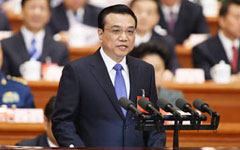
In this year's Government Work Report, Premier Li Keqiang said that China will eliminate the production capacity of 27 million tons of steel, 42 million tons of cement, and 35 million standard cases of flat glass in 2014. Listing such specific targets for a given year indicates the government's greater determination to eliminate backward overcapacity sectors.

Copyright 1995 - . All rights reserved. The content (including but not limited to text, photo, multimedia information, etc) published in this site belongs to China Daily Information Co (CDIC). Without written authorization from CDIC, such content shall not be republished or used in any form. Note: Browsers with 1024*768 or higher resolution are suggested for this site.
License for publishing multimedia online 0108263 Registration Number: 20100000002731