Representatives from at least seven Chinese provinces met with officials from the National Development and Reform Commission, the country's top economic planner, hoping to secure industries to potentially be relocated outside Beijing, it was reported.
The national urbanization plan was unveiled last month. Eleven city governments in Hebei province have contacted decision-makers in the central and Beijing municipal governments to "show strength and willingness" to take enterprises that may be moved, said a Hebei provincial government official, who declined to be named.
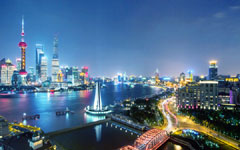
"All of the approximately 200 provincial development zones in Hebei are now ready for the landing of Beijing's industries," he said. There is interest further afield, in Shanxi, Liaoning, Shandong provinces, the Inner Mongolia autonomous region and the Shanghai Pudong district.
 |
|
 |
If possible, the Shanghai Pudong district wants to import biotechnology companies because of the Yangtze River Delta's strong research and development base, analysts said.
Authorities in Tianjin, with its good harbor infrastructure, construction and research facilities, would like to draw logistics and R&D centers.
The Beijing and Tianjin governments signed in 2013 the first cooperation agreement covering transport, logistics, technology, the environment and tourism.
There are, of course, downsides.
Beijing will only release industries that don't match its identity as China's political and cultural center, so neighboring governments ought not to exaggerate the opportunities, Xiao Jincheng, a researcher with the NDRC, said.
"The industries to be moved to Hebei are limited, let alone as far away as Shandong and Liaoning," Xiao said.
"The service sectors account for 80 percent of Beijing's economy. Beijing will not transfer its backbone industries of petrochemical, automobile and information technology, which were reallocated to Beijing's suburban areas several years ago."
Beijing's largest industrial transfer was completed before 2008, when its largest iron - and steelworks, Shougang Group, was moved to Caofeidian.
The only business transfer from Beijing to Hebei is a cloth wholesale market, moved to ease traffic and reduce the migrant worker population in an already crowded area.
"To overcome local protectionism and optimize the distribution of resources, the central government should set up an authority, above provincial government, to coordinate efforts and take charge of regional integration," said Wen Kui, an economist with the Beijing-based Capital University of Economics and Business, the leading researcher and consultant of integrated development in Beijing.
Then you will get a "deeper integration and exchange of production factors, rather than the simple transfers of industries and investment," he added.
Don't miss:
|
 |
 |
| China's top 10 richest cities |

Copyright 1995 - . All rights reserved. The content (including but not limited to text, photo, multimedia information, etc) published in this site belongs to China Daily Information Co (CDIC). Without written authorization from CDIC, such content shall not be republished or used in any form. Note: Browsers with 1024*768 or higher resolution are suggested for this site.
License for publishing multimedia online 0108263 Registration Number: 20100000002731