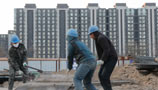
Land management and ownership are pressing issues as China strives for efficient, inclusive and sustainable urbanization, a study by the country's major think tank and the World Bank showed on Tuesday.
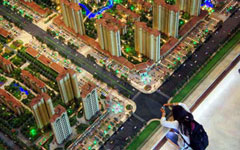
So much agricultural land was used to expand urban areas that the amount available to farm has dropped to the "red
|
 |
According to the report, released jointly by China's Development Research Center and the World Bank, there are major tasks facing the country in the new urbanization process, with land reform top of the agenda.
"Once cities have expanded in an inefficient way, it is hard to reverse," the report said. "While government prepares for stronger property rights for farmers, it may wish to tighten land conversion and make more efficient use of existing urban land."
Urbanization must no longer be driven by financial opportunities from land conversion, China's Vice-Finance Minister Shi Yaobin said. "City construction is mainly supported by revenues from land sales, which is unsustainable," Shi told the forum.
A higher portion of local government expenditures should be supported by property tax and charges for urban services, Shi said.
The government has promised to accelerate property tax legislation this year. China does not have a nationwide property tax but hopes to introduce one to rein in home-price growth and raise local government revenue. Property tax is currently levied annually on owners of large and expensive homes in pilot projects in Shanghai and Chongqing.
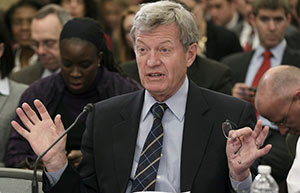
According to Indrawati, the government will play a different role in the new model of urbanization which, through better land, labor and capital allocation, can be environmentally sustainable and ensure China's food security.
"It will support rather than supplant market forces, and it will allow China's cities to grow more organically and efficiently," said Indrawati. "New urbanization is not merely about bricks and mortar. It puts people at the center of the strategy." China's urbanization is regarded as a key driver for economic expansion in coming years and a trigger to transform the country's growth model.
The main benefit of reform will be higher-quality growth. The changes proposed in this report - for land, household registration, fiscal systems and different incentives for local governments to attract investment, will make allocation of land, capital and labor more market-based. That, in turn, will change the distribution of economic activities across urban China.
In 2030, up to 70 percent of all Chinese will live in cities. Each year, 20 million Chinese move to cities. That's 1.8 million a month, the equivalent of the cities of Hamburg or Vienna, statistics from the World Bank showed.
If well managed, urbanization can create enormous opportunities; allow innovation and new ideas to emerge; save energy, land and natural resources; and manage climate change and the risk of disasters, the report said.

Copyright 1995 - . All rights reserved. The content (including but not limited to text, photo, multimedia information, etc) published in this site belongs to China Daily Information Co (CDIC). Without written authorization from CDIC, such content shall not be republished or used in any form. Note: Browsers with 1024*768 or higher resolution are suggested for this site.
License for publishing multimedia online 0108263 Registration Number: 20100000002731