China's rise as a strong trading nation will not only help it meet its domestic economic goals, but also deepen its ties with the world
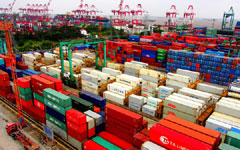
The year 2013 was special for China, for it saw a new leadership take office, the Third Plenum of the 18th Central Committee of the Communist Party of China issue an extensive reform plan, and China become the largest trading nation.
|
 |
|
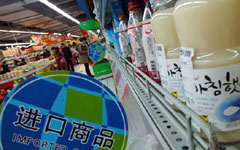 |
More importantly, the figures indicate that China has completed the transition from an inward-looking economy to an important stakeholder in the global economy and, therefore, should play a more active role in world affairs to maintain a more stable and benign economic environment in the world.
China was the world's largest trading nation from 1644 to 1912. In its Feb 16, 2013, issue, The Economist said: "The Qianlong Emperor (1711-1996) claimed, somewhat optimistically, that his dynasty's majestic virtue had penetrated every country under heaven. China's exporters and importers have now accomplished exactly that." Becoming the largest trading nation is a remarkable achievement, but it would be wrong to compare present-day China to the one during the Qing Dynasty. Today's China doesn't have the Qing Dynasty's imperial ambitions and is well aware of its real position in the world - a big but not a strong trading nation.
First, China is still not an innovative economy and lacks many core technologies; it is thus weak when it comes to competition. The US economy, in contrast, is driven by innovation. According to the US Department of Commerce, its intellectual property-intensive industries support at least 40 million jobs and contribute $5.1 trillion (or 34.8 percent) to the country's GDP.
Second, China's trade is disproportionately dependent on exports, and the US has a big lead over China in terms of trade in services. China's trade in services in 2012 was about $471 billion, less than half of the US' $1.07 trillion. Moreover, the low proportion of value-added processing trade makes the Chinese economy vulnerable to certain factors, with the uncertain global demand, a stronger yuan and rising labor costs taking their toll on Chinese exporters.

Copyright 1995 - . All rights reserved. The content (including but not limited to text, photo, multimedia information, etc) published in this site belongs to China Daily Information Co (CDIC). Without written authorization from CDIC, such content shall not be republished or used in any form. Note: Browsers with 1024*768 or higher resolution are suggested for this site.
License for publishing multimedia online 0108263 Registration Number: 20100000002731