 |
|
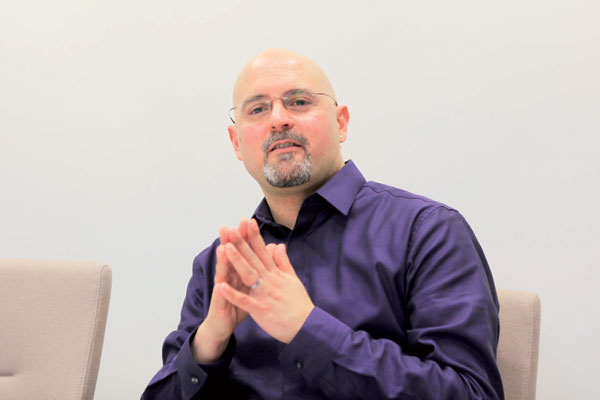
Michael Barr says China should be allowed to develop as an alternative to the Western model and not seen as a threat. Cecily Liu / China Daily |
China needs to understand more about its own identity and values in order to develop effective soft power abroad, says Michael Barr, lecturer in international politics at Newcastle University, England.
Barr, who wrote the 2011 book Who's Afraid of China? The Challenges of Chinese Soft Power, says a key challenge to Chinese soft power lies in the discrepancy between the traditional Chinese values it promotes and modern values emerging from its society.
"Because the Chinese identity is changing, China is having a hard time deciding what is the positive contribution of Chinese soft power," Barr says.
Soft power is a concept coined by political scientist Joseph Nye of Harvard University in a 1990 book to describe the ability to attract and co-opt rather than coerce, use force or give money as a means of persuasion.
In recent years there has been a flurry of Chinese soft power activity abroad, including the establishment of Chinese language centers, the growth of Chinese media and other creative industries.
A crucial characteristic of these campaigns, Barr says, is an emphasis on traditional Chinese values of harmony and peace, which Westerners may have a hard time believing when they witness the problems China faces today, such as territorial disputes.
These traditional values are exemplified by the logo of the Confucius Institute, which features the wings of a dove encircling the earth, Barr says, and by the story of Zheng He, an admiral during the early Ming Dynasty (1368-1644), who commanded expeditionary voyages to Southeast Asia, South Asia, the Middle East and East Africa without colonizing any country.
In contrast, Barr believes a new set of values, including materialism, family focus, care of the environment and good cuisine, are more apt depictions of Chinese contemporary society.
"One of the defining characteristics of today's Chinese society is materialism - to be materially comfortable and secure," he says. "That's universally true of people. You can see in China where getting rich remains a priority for people."
But Barr says there are deeper values than materialism, such as appreciation of family, well demonstrated by Chinese people's reluctance to put family members in care homes.
"There is a strong sense of responsibility for family - and family ties that in the West we don't have," he says, adding this family aspect also relates to a strong sense of community.

Copyright 1995 - . All rights reserved. The content (including but not limited to text, photo, multimedia information, etc) published in this site belongs to China Daily Information Co (CDIC). Without written authorization from CDIC, such content shall not be republished or used in any form. Note: Browsers with 1024*768 or higher resolution are suggested for this site.
License for publishing multimedia online 0108263 Registration Number: 20100000002731