

 Comments
  Print
Print  Mail
Mail  Large Medium Small
DALIAN - China needs less government intervention and should rely more on the invisible hand to boost consumption as the country moves away from an investment-led growth model, economists and business representatives proposed on Thursday.
"China's consumption potential is huge. The key is to give the market more freedom and create a friendly environment allowing businesses to stimulate demand," Zhang Weiying, an economist at Peking University, said at the ongoing 2013 Summer Davos Forum.
Stimulating domestic consumption has been high on the government agenda for years. During a meeting with visiting business representatives on Tuesday, Chinese Premier Li Keqiang once again stressed the importance of consumption in driving sustainable and healthy growth in the long term.
Over the years, the government has introduced a number of policies, including subsidies on household appliance purchases in rural areas and energy-efficient products, to stimulate consumption.
These policies can work in the short term, but might distort markets, said Zhang, a market economy advocate.
The government should create a fair environment and leave the job of stimulating consumption to businesses and entrepreneurs, he said, adding that government intervention only restrains innovation.
Consumption constituted 45.2 percent of GDP growth in the first half of the year, compared with 53.9 percent from investment, according to data from the National Bureau of Statistics (NBS).
Gary Liu, executive director of CEIBS Lujiazui Institute of International Finance in Shanghai, attributed the public reluctance to spend mainly to imbalanced income distribution that concentrates wealth in a few, as well as a sense of insecurity in the face of soaring education, healthcare and housing costs.
"Although Chinese people are getting wealthier, the consumption level of most remained at a very low level," he said, pointing to monopolies as a major reason for the income gap.
Earlier NBS data showed the Gini coefficient, an index of income inequality, reached 0.474 in China in 2012 -- higher than the warning level of 0.4 set by the United Nations.
Like Zhang, Liu advocated market-oriented reforms to break up monopolies in order to create a level playing field, improve income distribution, and spur consumption.
In February of this year, the government unveiled a guideline to reform income distribution mechanisms amid growing public concern over a widening wealth gap.
The government will work to double the average real income of urban and rural residents by 2020 from 2010 levels and allow faster income growth for the poor. The government will also strengthen scrutiny on high-income groups, such as officials, state-owned enterprises and wealthy individuals, according to the guidelines, though they didn't offer detailed plans.
"Premier Li has stressed the government's determination to drive through reforms, and we look forward to the upcoming Third Plenary Session of the 18th Communist Party of China Central Committee for more detailed reform plans," Liu said.
 4th World Internet Conference concludes
 Starbucks Reserve Roastery set to open in Shanghai
 Smile to get discounts in Tmall's unmanned supermart
 Top 10 richest Chinese women in 2017
 World leading internet sci-tech achievements released in Wuzhen
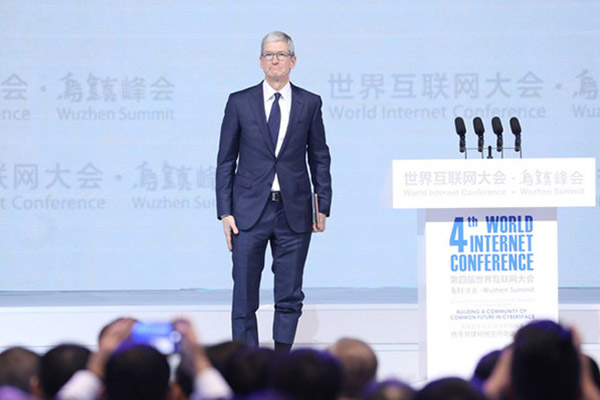 Top tech CEOs take to the stage as Wuzhen Summit opens
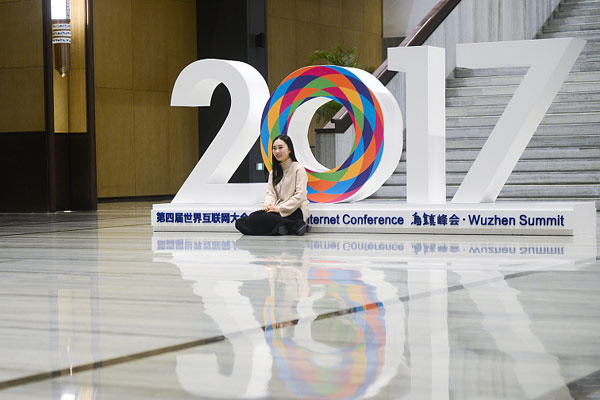 Major topics at 4th World Internet Conference
 'Made in China' dinosaurs amuse the world

Copyright 1995 - . All rights reserved. The content (including but not limited to text, photo, multimedia information, etc) published in this site belongs to China Daily Information Co (CDIC). Without written authorization from CDIC, such content shall not be republished or used in any form. Note: Browsers with 1024*768 or higher resolution are suggested for this site.
License for publishing multimedia online 0108263 Registration Number: 20100000002731