Comments
  Print
Print  Mail
Mail  Large Medium Small
"Industrialization and urbanization will inevitably lead to occupation of some rural land. Holders of rights to that land must be fully respected and reasonably compensated," Chen said.
Equal participation in modernization
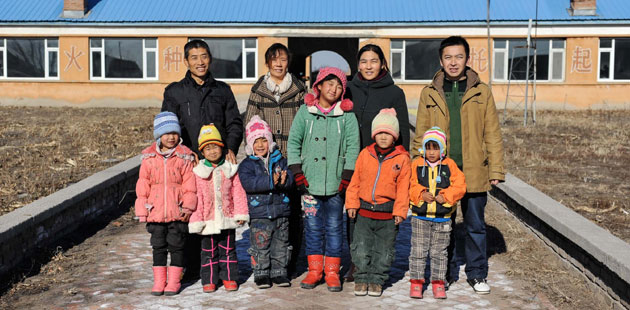
The developmental gap between rural and urban areas is the main obstacle to development. Despite galloping economic growth in the last 35 years, rural and migrant workers have been left behind.
According to the National Bureau of Statistics, the urban-rural income ratio -- a gauge of balanced social development -- was more than three to one in 2012. Last year, city dwellers' average incomes reached 24,565 yuan, those in the countryside stood at 7,917 yuan.
In 1978 when average city incomes stood at 343 yuan and rural at 134 yuan, city dwellers earned just over two and half times more than their country cousins. The income ratio has declined in recent years after peaking at 3.33:1 in 2007 and 2009, but the urban-rural wealth gap is still much too wide.
The masterplan envisages an urban-rural relationship with industry promoting agriculture, urban areas helping rural areas, and the countryside integrating with the cities.
"The current dualistic economic structure came into being during the planned economy and has become a major barrier to economic and social development in both urban and rural areas," Chen said.
Equal exchanges of production elements such as land, capital and labor between cities and countryside is absolutely essential. Public resources including education, medical care, cultural services and social security should be allocated in a balanced manner, he said.
The imbalance is much more than just income disparity. There is also a huge divergence in government services between cities and countryside.
Caught between the urban and rural residents are an army of 260 million migrant workers who live in cities but do not have access to the same public services as other urbanites who hold a city "Hukou", he said. "Hukou" is tied to place of residence and allows access to basic welfare and public services.
The plan promises to help migrants gradually become fully fledged urban residents, and make basic urban public services available to all.
"Reform of the Hukou system is very important to the urbanization drive," Chen said.
Developing agricultural businesses
China's agriculture is faced with a dilemma between less farmland and more demand for farm produce. Solving it does not only mean improving overall agricultural productivity through investment, better facilities and more technology, but the key is raising farm workers' enthusiasm for production, Chen said.
A new system of agricultural management, with family operations at the base, will encourage family ranches, cooperatives and local companies to manage agricultural production and will stimulate development.
Industrial and commercial capital will be encouraged to invest in rural areas to develop a modern farming and plantation businesses.
Chen said it was also very important to develop a better system of services for agricultural businesses.
 Survey: Big strides in domestic auto quality
 Auto Guangzhou witnesses new Porsche sports cars Asia Premiere
 Rise of the south's biggest show
 Sew be it
 Latest trend in tram
 CCTV 2014 advertising auction kicks off in Beijing
 Toyota TMEC opens hybrid tech R&D operations
 Toilet paper wedding dress to advocate low carbon lifestyle
Copyright 1995 - . All rights reserved. The content (including but not limited to text, photo, multimedia information, etc) published in this site belongs to China Daily Information Co (CDIC). Without written authorization from CDIC, such content shall not be republished or used in any form. Note: Browsers with 1024*768 or higher resolution are suggested for this site.
License for publishing multimedia online 0108263 Registration Number: 20100000002731