Comments
  Print
Print  Mail
Mail  Large Medium Small
BEIJING -- China is attempting to put its three medical insurance systems under one administration, but a healthcare researcher has warned that obstacles still remain, and an effective solution is to merge two of them initially.
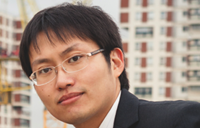
The move can only be done step by step, and the first step is to unify the management of the urban resident basic medical insurance and the new rural cooperative medical scheme, Ying Yazhen, of the National Health Development Research Center under the National Health and Family Planning Commission, was quoted as saying in a report carried on Thursday by the China Business News.
Merging the two insurance schemes is feasible as they are similar in terms of fund raising, reimbursement standards and the income of people under their coverage, Ying explained.
She said many places in China, such as parts of the eastern coastal province of Zhejiang and the central province of Anhui, have already merged the two insurances and realized a free capital flow between the two.
Considering its huge population and imbalanced economic development, China implements three separate medical insurances -- the urban workers basic medical insurance for urban employees, the new rural cooperative medical scheme for the rural population, and the urban resident basic medical insurance for people who are not included in the first two insurances, mainly the underage and unemployed residents in cities.
However, the two insurances set for urban residents are managed by the country's Ministry of Human Resources and Social Security, while the scheme for rural people is administrated by the NHFPC.
The State Council, or China's cabinet, decided this March to put the three insurances under one administration in order to reduce government redundancy and raise efficiency in medical services.
Ying suggested putting all the three insurances under the control of the NHFPC because it is best placed to coordinate the management of the insurances and the medical service fees and quality.
But the researcher insisted that a gradual process is needed for such unified administration.
Compared with the other two systems, the insurance for urban employees is quite different in its participation polices and financing levels, which can be five to seven times higher, Ying told the China Business News.
What's more, its reimbursement percentage for participants, which may reach up to more than 90 percent, is also much higher than the scheme for the rural population and the insurance for unemployed urban residents, according to Ying. The reimbursement percentages of the latter two are often about 55 percent of what patients should pay for medical services.
Ying said there have been rare examples across the country in which the three insurances have been merged for unified management; however, even where this has been attained, administrators have not been able to manage free capital flow among the three insurances.
Copyright 1995 - . All rights reserved. The content (including but not limited to text, photo, multimedia information, etc) published in this site belongs to China Daily Information Co (CDIC). Without written authorization from CDIC, such content shall not be republished or used in any form. Note: Browsers with 1024*768 or higher resolution are suggested for this site.
License for publishing multimedia online Registration Number: 20100000002731