Comments
  Print
Print  Mail
Mail  Large Medium Small
Khoo Teng Chye, executive director of Singapore's Center for Livable Cities, said the city-state is looking for more cooperation opportunities. Hyflux, which started operations in Tianjin in 2007, is one of the flagship projects of Sino-Singaporean cooperation on this area.
Tianjin - the largest coastal city in northern China - has two desalination plants, supplying more than 6 million tons of water into the distribution network since 2010. Other coastal cities, such as Qingdao, Shandong province, and Zhoushan, Zhejiang province, also have similar plants to process seawater for industrial use.
China's seawater processing capacity has reached about 760,000 tons per day, and the average cost has decreased from more than 20 yuan per metric ton to about 7 yuan a ton, a price similar to ordinary industrial water.
China is a huge and growing market for the desalination and water recycling industry, not only in coastal areas but also in inland areas, where the technology can be used for water-recycling projects, Khoo said.
"As in all technology development processes, there's a learning curve to overcome. I'm confident China will do well. The government has already given very clear guidance on this matter with clear targets. What remains is to make desalination economically viable, and market forces will then propel its development," Khoo said.
The government guidance to which Khoo referred is the 12th Five-Year Plan (2011-15) for the water desalination sector, which was issued last year.
As one of 13 countries across the world with a severe shortage of freshwater, China's per-capita freshwater reserves are only one-fourth of the global average. About 447 out of 600 cities in China suffer from water shortages, and 147 cities are seeing severe shortages.
According to the development plan, water desalination projects are the country's "choice for survival". By 2015, the government plans to triple the current industry output and provide water to at least 15 million people.
But technology disadvantages are not the only barrier hindering the development of the industry.
Despite the explicit government support, Wang said the industry has not seen any "noticeable increase" in recent years, due to a nationwide halt of infrastructure projects and the massive south-to-north water diversion project.
The construction of water desalination plants came to a standstill, as many other construction projects during China's economic slowdown, while the diversion of water from southern areas has also helped to relieve some pressure in the north.
"The seawater surrounding China is highly polluted. Plants have to clean up large amounts of oil leaks and algae before the water goes into the desalination process. Reducing the expenses of the purification process is certainly a major task ahead of us," Wang said.
Even so, Khoo said the cost of purifying and desalinating water is lower than diverting water all the way from the south, and costs will continue to come down due to the use of better technology and the true involvement of the private sector.
"After all, this is a strategically important development that will impact the long-term water security of China," he added.
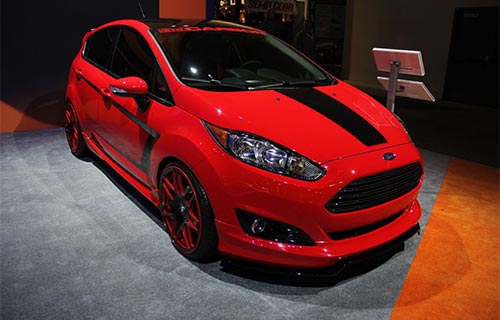 Modified Ford Fiesta by 3D Carbon at SEMA Show
 Modified Ford Fiesta ST by MRT at SEMA Show
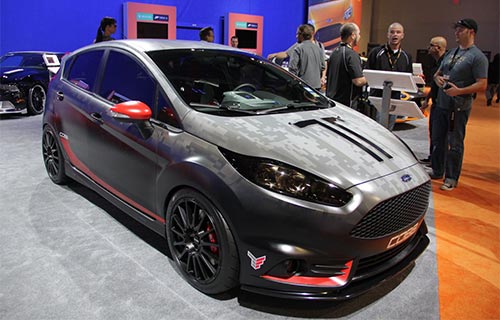 Modified Ford Fiesta ST by COBB at SEMA Show
 Hong Kong Optical Fair Kicks off
 The predicted christmas best gifts for children
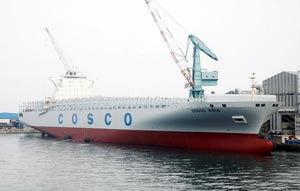 Voyage to a sustainable future
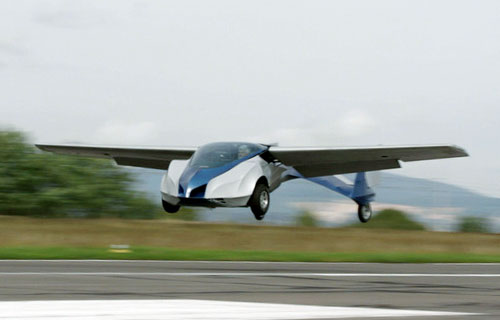 Slovak flying car
 Model with modified Maserati GranTurismo S
Copyright 1995 - . All rights reserved. The content (including but not limited to text, photo, multimedia information, etc) published in this site belongs to China Daily Information Co (CDIC). Without written authorization from CDIC, such content shall not be republished or used in any form. Note: Browsers with 1024*768 or higher resolution are suggested for this site.
License for publishing multimedia online 0108263 Registration Number: 20100000002731