Innovation in the wrong field


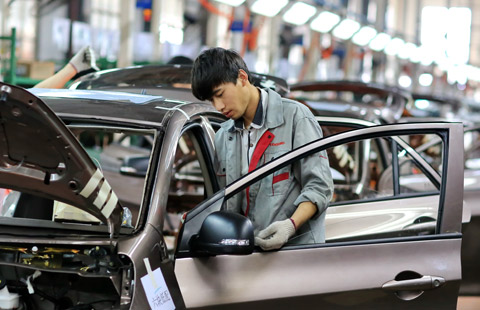
On the positive side, urbanization allows farmers who move to cities to increase their income by a factor of 3: today the average annual income of rural residents is 8,000 yuan ($1,304) while that of migrant workers is 27,000 yuan. Second, when a rural resident changes his hukou from rural to urban, he gives up the right to his land that ends up - eventually - as an asset in the hands of the local government, which can sell it to a property developer for a significant sum and boost its GDP. The farmer, who abandons his right to the land, normally receives a lump sum (but far less than the real land price), which may appear to be a good deal at the time. But little does the farmer know that the value of this money will be eroded by inflation.
On the negative side, although migrant workers can have access to the same social services as urban residents, the actual value loss of those services is still under study. And though we don't have a definitive answer, it could be, at least, psychologically important. Rural workers do not contribute significantly to the economies of the cities they migrate to. Even if their earnings are in line with the host city's average, they tend to spend very little of their income, save as much as possible and remit it to their families back in the countryside. No wonder, we often hear local governments complain that they don't have enough funds to provide migrant workers social services.
Rural workers do see their income increase significantly when they move to cities but so does their cost of living. We should not fall into the trap of believing that income is a measure of economic wealth. What matters is the capacity to enjoy a certain lifestyle, which most migrants do not.
Local governments need to spend money to build and develop infrastructure.
Finally, after talking with several rural residents across China, I have come to know that while many would be happy to move to cities for a better life (and this may just be an optimistic view), very few are willing to give up their land. They are right to think so, because land is their insurance for the future, a place to go back to when things turn sour in a city.
If my conclusion is correct, then the question of how fast China should push forward with urbanization could be answered by the scarcity of farmers willing to move to cities.
At that point, one of the key input factors of the Chinese economy would begin to weaken and new drivers of growth have to be found.
As a famous African proverb goes, "If you want to go fast go alone; if you want to go far, go together". China appears to be on the fast track, let's hope it will go far too.
The author is head of Global Policy Institute China and professor of finance at Zhejiang University, Hangzhou, and Nottingham University Business School, Ningbo.