Financial repercussions


The stock market's drastic fall on Monday and Tuesday could be part of an already started cycle of global equity volatility following the US Federal Reserve's decision to taper off its stimulus program.
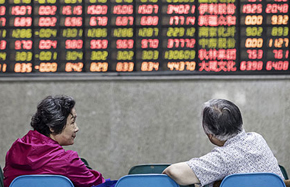
The benchmark Shanghai Composite Index plunged to 1850 at one point on Tuesday, and the two-day 10 percent drop was the lowest intraday trading since early 2009.
The stock markets of Japan and the United States have already witnessed major setbacks in the past month. While these falls were partly a normal correction after sustained gains in previous months, the dented investor confidence as a result of the Federal Reserve's decision to withdraw from its stimulus program was also a crucial factor.
In China, domestic financial stress has been the direct trigger for the tumbling Shanghai and Shenzhen stock indices.
That said, the US' far-reaching decision to gradually stop its bond-buying program - and the expected rise in the dollar - is having a profound impact on the global financial markets, as well as the real economy.
China's plummeting stock market this week serves as a timely reminder for China, and other emerging markets, that as the US plans to stop pumping $85 billion into the financial system every month, as it is has been doing, they will have to cope with increased pressure from their own economic and financial rebalancing.
The monetary easing policy by the US, most recently the bond-buying program, has contributed to capital flows into the emerging markets, which, together with their own easing policies, pushed up asset prices.
The end of the US monetary policy will mean the emerging economies, China in particular, will have to undergo a major policy shift to cater to the upcoming changes in the global and domestic monetary environments. For example, they will have to make efforts to channel capital, much of which now is concentrated in the financial sector in search of quick gains, into the real economy.
Such a major structural shift will inevitably have financial repercussions and demands close attention and pre-arranged countermeasures from regulators.
For China, the recent tightness in the interbank market and the stock market turbulence are only the first phase of shocks.
As its efforts to try and solve the shadow banking problem continue, the banking sector will face severe stress and, ultimately, the real economy as a whole may suffer as a result of credit contraction.