
 Comments
  Print
Print  Mail
Mail  Large Medium Small
Authorities need to crack down on illegal activities that are facilitating the influx of speculative capital
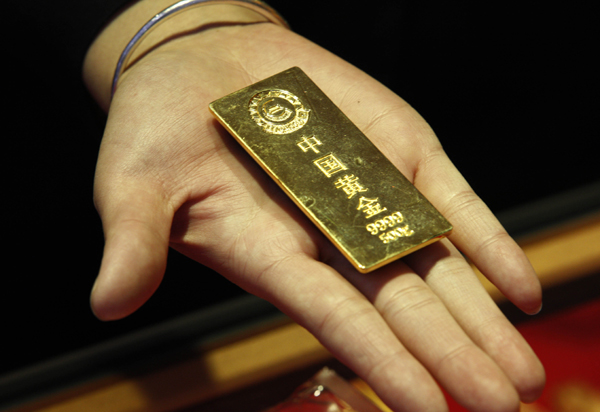
China is under mounting pressure from an influx of short-term capital, as is indicated by a newly increased 1.22 trillion yuan ($198.4 billion) in its funds outstanding for foreign exchange in the first quarter, a big increase on the 494.6 billion yuan for the whole of last year. The country's capital and financial account surplus has also soared, to $101.8 billion in the first quarter of this year, up from only $20 billion in the fourth quarter of last year.
Short-term capital, other than direct investment and securities, has constituted the lion's share of China's newly increased capital influx in recent months. This speculative capital has chosen to flow into China mainly through transfer pricing in trade transactions, especially through over-reporting of export volumes, instead of via normal financial channels. The evidence is China's unbelievable year-on-year export growth over the past months, a growth that has drawn wide speculation.
In the context of lingering contraction in its external demand, the 25, 22, 10 and 15 percent year-on-year monthly export growth China has reported from January to April has prompted widespread doubts considering Asian export competitors, such as the Republic of Korea, have suffered export slumps over the past months. Data released by China's main export destinations also show that their imports from China are much less than China has reported. A majority of domestic oceangoing shipping companies engaging in international trade have also reported gloomy performance over the past months. All these, together with China's feeble purchasing managers' index, a protracted recession in the world's major economies and a fast rise in the yuan's effective exchange rate, mean China is not on a sound foundation for robust export growth.
China's good-looking export figures are possibly the result of some domestic exporting enterprises over-reporting their export revenues as a way of gaining more export refunds from the government. The possibility also cannot be ruled out that some local governments have played a role in beautifying local export performances in order to meet their promised export growth targets. Renewed expectations for the yuan's appreciation since the end of 2012 and the considerable rise in domestic property prices have also attracted the flow of a large volume of short-term capital to China via false trade deals.
Some believe that the latest influx of speculative capital will only last half a year. Due to the further deceleration of China's economic growth that is expected in the latter half of this year, a possible adjustment of domestic property prices and the decline in appreciation pressure on the yuan, along with a possible withdrawal of the US Federal Reserve from its years-long monetary easing policy, China, they believe, will experience an outflow of short-term capital in the latter half of this year, such as the one it experienced in 2012.
But we should not be that optimistic. Considering the continuous monetary easing policies adopted by central banks across the world and the appreciation pressures on the yuan, the latest short-term capital inflow is likely to continue to the end of 2013 and perhaps longer.
The State Administration of Foreign Exchange has worked out a series of measures aimed at curbing the influx of speculative capital. These include a strengthened clampdown on transfer pricing activities via trading channels and a stricter control of foreign exchange loans by domestic financial bodies. These measures should help check the inflow of profiteering short-term capital.
Some believe that China should lower interest rates as a way of narrowing its interest rate gap with foreign countries and containing short-term capital inflows, especially at a time when developed countries have raced to cut interest rates. But for a big economy such as China, interest rate policies should aim to control inflation. Despite being at a relatively low level, the country's inflation is likely to rise in the coming months. This means China has no room for interest rate cuts. Lower interest rates would also push property prices higher and fuel property bubbles. Expectations for a continuing rise in house prices will only accelerate the inflow of foreign short-term capital.
To more effectively check the influx of speculative capital, China should tighten its capital account regulation. It can resort to the measures it employed in the first half of 2008 to curb capital inflows via transfer pricing in trade transactions. The departments of foreign exchange, commerce and customs should work together to guard against illegal activities in transfer pricing. At the same time, these departments should strengthen monitoring with domestic commercial banks to trace the flow of foreign investment funds. These measures, if implemented, will effectively hedge against a large-scale short-term influx of capital.
In view of the fact that expectations for the yuan's appreciation against the US dollar have served as a major cause of the short-term capital inflows, China's central bank should adopt various measures to ease such expectations, including interventions into the fluctuation of the yuan's exchange rate against the dollar through regulating its central parity rate and temporary suspension of measures aimed at expanding the daily limitation of its fluctuations against the dollar.
The positive repurchases and central bank bonds recently re-launched by China's monetary authorities to tighten fluidity are also expected to help curb the influx of speculative capital.
The author is a researcher with the Institute of World Economics and Politics under the Chinese Academy of Social Sciences.
 HK's new cruise terminal receives luxury liner
 Future points to carbon trading
 Seafood businesses flounder amid spending cut
 Equities slump amid slow-growth estimates
 Auto show opens with much fanfare in Xi'an
 Sunnylands summit fuels Chinese tourism interest
 'Palace on wheels' on sale for $3.13m in Dubai
 Fortune smiles on Chengdu as forum concludes
Copyright 1995 - . All rights reserved. The content (including but not limited to text, photo, multimedia information, etc) published in this site belongs to China Daily Information Co (CDIC). Without written authorization from CDIC, such content shall not be republished or used in any form. Note: Browsers with 1024*768 or higher resolution are suggested for this site.
License for publishing multimedia online 0108263 Registration Number: 20100000002731