Central banks rush to cut rates, but China stands firm


WASHINGTON - While central banks worldwide have cut rates and weakened their currencies in response to the plummeting Japanese yen, China has stood firm, confident that its economy, the world's second biggest, can withstand current global weakness, a leading economist says.
A wave of interest rate cuts
Central banks in the eurozone, India, Australia, South Korea, Poland and Israel have cut rates in recent weeks, amid lower-than-expected global growth and Yen's sharp depreciation, which fueled competitive devaluation concerns.
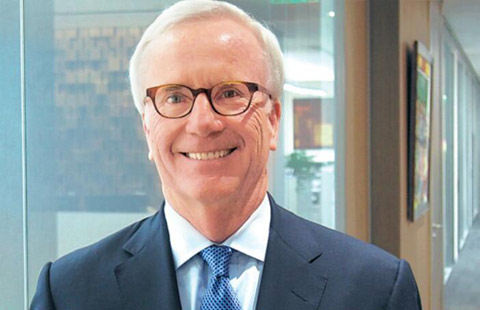
"I think it's a trend that has been going for a while," Felix Huefner, deputy director of global macroeconomic analysis at the Institute of International Finance, a global association of more than 450 financial institutions, told Xinhua in a recent interview.
"The big background is that growth in the mature economies is very weak. The domestic demand is very weak. That's because of fiscal consolidation, and you have problems in the banking sector. So that's why all the central banks of G3, the United States, eurozone and Japan have lowered interest rates closer to zero and launched unconventional monetary policies," Huefner said.
The US Federal Reserve is currently buying $85 billion worth of long-term bonds to push down borrowing costs and boost the housing market. The Bank of Japan unveiled a series of more aggressive easing measures in April, aiming to double its monetary base over the next two years to end nearly two decades of deflation in Japan.
Because of these measures, "money flows out of mature economies into emerging markets. And emerging markets are responding by lowering interest rates," Huefner said.
When a country cuts interest rates, it reduces the appeal to investors of holding the currency and weakens the currency.
Huefner also said the European Central Bank (ECB), and the central banks of South Korea and Australia cut interest rates partly because of the yen's depreciation against their currencies. The yen has depreciated about 30 percent against the US dollar since early October 2012.