Big Panda v Little Rabbit tale hits screens


|
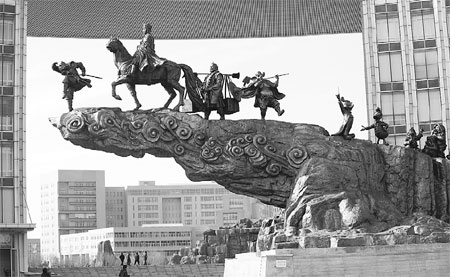
Statues of classic characters from home and abroad stand alongside each other at the National Animation Industry Park in Tianjin, which is the largest animation center in China. The center develops projects for domestic and international animation and online game companies. [Photo/China Daily] |
China's movie animators muster forces to match Hollywood
It was no contest. In the summer of 2008, Hollywood's animation studios kicked their Chinese counterparts out of the ring in technique and power. To add insult to injury, they did it in true Chinese style.
That was Kung Fu Panda, which took $26 million to become the highest-grossing animation film released in China.
In true plucky underdog style, the humbled, undervalued but newly inspired Chinese animators fought back, and in the summer of 2011 released five features, including the first to use 3-D - The Legend of a Rabbit.
|
 |
Sadly, although they all showed a marked improvement in quality of animation and special effects, like the hero bunny's ears, they flopped. The Legend of the Rabbit grossed only 20 million yuan ($3.2 million) in China. It had cost around 150 million yuan to make.
Of course, it did not help that the superior sequel Kung Fu Panda 2 was released a couple of months before, going on to take a record-breaking $93 million for an animation film in China.
Meanwhile, effects-laden Transformers 3 earned 1 billion yuan to dominate the Chinese box office overall that year, proving, if nothing else, the prolific rise, and the tastes, of the country's cinema goers.
That is something worth fighting for, and Chinese animation moviemakers are gearing up for the next round against Hollywood in Tianjin, the coastal city 111 kilometers east of Beijing.
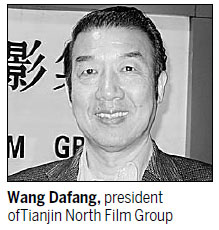
"Comparatively speaking, there's a sad consensus that domestic animated movies lag far behind Hollywood, not only in plots but also in production techniques, so people are unwilling to spend money on such movies," said Dong Fachang, producer of The Legend of a Rabbit, at his office in Tianjin North Film Group. "Another thing is that many Chinese moviemakers still position animation movies to attract children only."
Like its panda nemesis, Rabbit was aimed at a general audience, and in plotting and visual effects, it is considered a milestone work in China. But while critics and viewers recognized its technical qualities, they bemoaned the storytelling.
Rabbit "hobbles rather than hops, but has consistently good special effects", wrote the Hollywood Reporter. The screenwriters "hadn't pulled any rabbit out of their hats" with storytelling techniques "as straight as an arrow".
But while that creative side - concepts and scripts - relies as much on chance as genius, there is still a lot that can be achieved on the technical side through animation techniques and special effects, and in reducing time and cost.
This means big room for improvement and huge business opportunities in China, especially when the country's movie market value has been growing by 30 percent annually in recent years.
Tianjin, a municipality highly developed in heavy industry, is now moving fast to narrow the gap through not only technological innovation but also international cooperation.
At the city's National Animation Industry Park is a global village created from animated movies. Statues of classic characters from home and abroad stand alongside each other: Disney's Mulan and her dragon Mushu, China's Monkey King and the Mole from the Czechs.
Inside the National Supercomputer Center at the park, the country's fastest computer called the TH1 has greatly accelerated the rendering of animated movie images. Work that normally takes six to eight months can now be done in one or two.
|
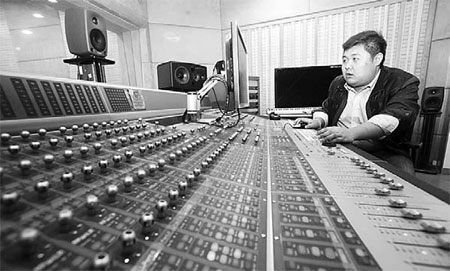
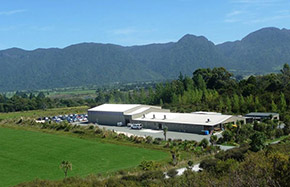
The recording studio in the Public Technical Service Platform. The facilities cover 10,000 square meters and include studios for viewing, recording and mixing. [Photo/China Daily] |