Comments
  Print
Print  Mail
Mail  Large Medium Small
The continued deviation between consumer and producer price indices is another thorny problem for policymakers, especially the monetary authorities.
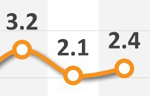
The consumer price index rose 2.4 percent year-on-year in April, up from 2.1 percent in March, according to the National Bureau of Statistics. The producer price index, on the other hand, fell by 2.6 percent in the same month, the 14th consecutive monthly fall. But the deviation is not surprising given the rising food and housing-related costs and the weak economic growth.
A 4 percent gain in food prices, up from 2.7 percent in March, has contributed to the consumer price rise, as the fall in meat prices as a result of the H7N9 flu outbreak has been offset by rising vegetable prices. Meanwhile, the policy-induced briskness in new house transactions has pushed up housing-related prices, another major component of the CPI basket.
At the same time, the weak economic growth and the slump in commodity prices on the international market have driven down factory-door prices.
There have been similar cycles in which the CPI and PPI growth trends deviate from each other, in late 1990s and early 2000s and during the 2008 global financial crisis. All were difficult times for the Chinese economy.
With consumer inflation edging up, there are few signs that the weak economic growth will improve any time soon. China's GDP growth fell short of expectations at 7.7 percent in the first quarter while its manufacturing activity index continued to dip in April. Policymakers can ease their monetary stance to stimulate the economy, but this will risk fanning consumer inflation and have other undesirable ramifications.
As major economies, such as Japan and the United States, have sought to ease their monetary pool, more countries have followed suit by cutting their interest rates recently, which makes it increasingly urgent for Chinese policymakers to take action; otherwise they will have to tackle the problem of capital inflows due to relatively high interest rates.
Any cut in China's interest rates, however, would further push up prices in the already red-hot real estate market. The rise in house prices will in turn exacerbate consumer price rises.
Given the complicated scenario, China must tread carefully and maintain stable growth while preventing the potential risks from materializing.
 HK's new cruise terminal receives luxury liner
 Future points to carbon trading
 Seafood businesses flounder amid spending cut
 Equities slump amid slow-growth estimates
 Auto show opens with much fanfare in Xi'an
 Sunnylands summit fuels Chinese tourism interest
 'Palace on wheels' on sale for $3.13m in Dubai
 Fortune smiles on Chengdu as forum concludes
Copyright 1995 - . All rights reserved. The content (including but not limited to text, photo, multimedia information, etc) published in this site belongs to China Daily Information Co (CDIC). Without written authorization from CDIC, such content shall not be republished or used in any form. Note: Browsers with 1024*768 or higher resolution are suggested for this site.
License for publishing multimedia online 0108263 Registration Number: 20100000002731