Comments
  Print
Print  Mail
Mail  Large Medium Small
Vice-premier also calls for escalating scale of electricity charges, with excessive users targeted
China may introduce tougher taxes on emissions and use of resources, after Vice-premier Ma Kai said more reforms are needed to achieve greener industrial development.
In an article for Qiushi Magazine on Thursday, Ma called for an increase in the funds needed to tackle pollution "via taxation measures".
He said measures could include a heavier tax burden on companies and higher prices for the use of resources, such as water.
To promote energy saving and enhance efficiency, Ma called for innovative pricing mechanisms for resources, and for more use of renewable energy such as hydro and nuclear power.
Ma also asked for an escalating scale of electricity charges, with higher charges imposed for excessive users.
"We will continue to push forward a pricing mechanism by soliciting opinions from multiple parties, including government, enterprises, and consumers," he said.
A round of reforms of the resource tax system was carried out in November 2011, when the assessment of oil and gas production was moved from being based on volume to value, based on a 5 percent tax rate.
The revised tax policy raised oil production costs by nearly 17 percent per barrel, according to the 2012 annual report of China National Offshore Oil Corp.
However, the reform didn't include coal, the source of about 70 percent of the country's energy generation, which was still taxed by volume.
Provinces with rich coal reserves such as Shanxi and Xinjiang Uygur autonomous region have continually appealed for coal to be included in resources tax reform.
If included in the value-based system, tax on coal production would be increased from less than 4 yuan per metric ton to 12 yuan, even on a low tax rate of 2 percent.
Previous reports said the resource tax rate for coal would be between 2 and 5 percent.
Jia Kang, director of the Research Institute of Fiscal Science at the Ministry of Finance, said the rollout of an all-encompassing resource tax, including coal, would be a "tough fight".
However, despite concerns over heavier burdens being placed on enterprises, Jia said an environmental tax would force factories to restrict excessive production, and adopt more energy-saving technologies.
He also said that the government should improve its social welfare system to guard against any rising tax burden being passed onto consumers.
Ma said enterprises will be encouraged to participate in carbon trading, and a third-party organization will be established to calculate carbon emissions for each company.
A similar mechanism will also be introduced to monitor sewage discharge, he said.
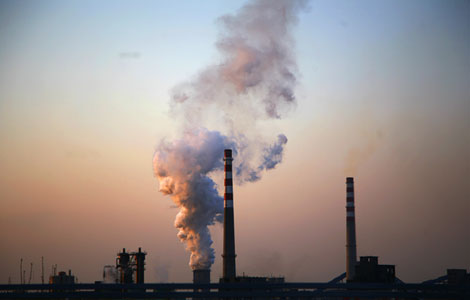
The planned environmental tax measures are expected to eliminate outdated, high-energy consumption and high-polluting industries.
According to Ma, energy consumption and environmental awareness will also be included in the evaluation system of local officials, to raise their awareness of energy conservation.
Angel Gurria, secretary-general of the Organization for Economic Cooperation and Development, said during a recent visit to China that improvements are needed in the country's energy efficiency efforts, and in reducing carbon-dioxide emissions, with a carbon tax being preferable to emissions trading.
Energy conservation should be encouraged through higher excise duties on gasoline, he added, while water prices should be raised for end-users, and levies and pollution taxes increased. Standards for vehicle emissions and fuel quality should also be tightened, he said.
 HK's new cruise terminal receives luxury liner
 Future points to carbon trading
 Seafood businesses flounder amid spending cut
 Equities slump amid slow-growth estimates
 Auto show opens with much fanfare in Xi'an
 Sunnylands summit fuels Chinese tourism interest
 'Palace on wheels' on sale for $3.13m in Dubai
 Fortune smiles on Chengdu as forum concludes
Copyright 1995 - . All rights reserved. The content (including but not limited to text, photo, multimedia information, etc) published in this site belongs to China Daily Information Co (CDIC). Without written authorization from CDIC, such content shall not be republished or used in any form. Note: Browsers with 1024*768 or higher resolution are suggested for this site.
License for publishing multimedia online 0108263 Registration Number: 20100000002731