Migrants: linchpin of China's urbanization


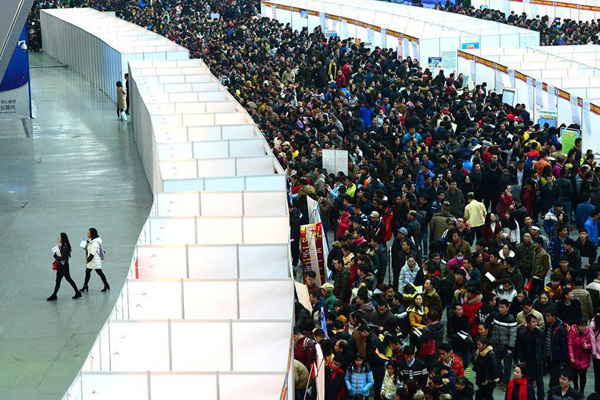
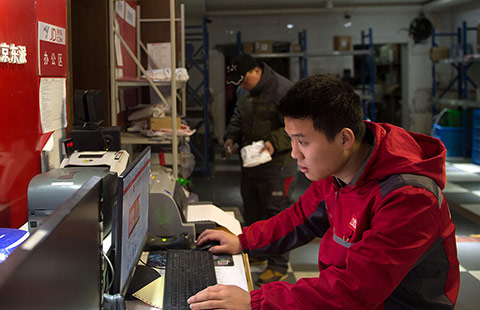
BEIJING -- China's hundreds of millions of migrant workers, about two thirds of the US population, underpins China's transition toward a consumer economy. But if mishandled, they may also form a disgruntled urban underclass lacking social benefits.
Tom Miller, author of "China's Urban Billion", told Xinhua that the rural migrants of China are the linchpin of the country's further urbanization.
By the end of 2012, over 700 million people populated Chinese cities, or 52.6 percent of the total population. More than 250 million are migrants who live and work in cities but are denied social benefits due to the household registration system.
"As China tries to shift its economic model away from investment and more toward domestic consumption, it doesn't make sense to have one in three people in the cities who really cannot consume," said Tom Miller, managing editor of the China Economic Quarterly.
Migrants are forced to save more of their income to spend on health care and their children's education, as they're ineligible for social benefits.
Yet to abolish the household registration system overnight may ignite an enormous influx of people that exceeds the capacity of cities. Urban slums that skirt modern buildings in cities like Rio de Janeiro and Mumbai could also appear.
Miller said Shanghai has set a model for household registration reform.
Those who have a temporary Shanghai residency certificate and have stayed in the city for at least seven years may apply for a local Shanghai hukou. They're then registered as Shanghai residents covered by the local social welfare system.
In countries like Japan, household registration isn't linked to the allocation of social benefits. But Miller admits that although it may be the end game of China's reform, it has to be carried out gradually.
Unlike many other countries that have only one megacity, such as London in the UK or Bangkok in Thailand, China has to concern itself with efficiently managing several megacities in the wake of its rapid urbanization.
"Now the idea is to build very large urban clusters. China would have to have several megacities, with satellites around them," Miller said.
As China forges ahead, certain urban areas are vacant and thus have been labeled "ghost towns". But Miller disagrees.
"Most of the so-called 'ghost towns' are not towns at all. They're 'ghost suburbs'," he said.
He believes that as government offices and university campuses are relocated to the new areas, those suburbs will gradually fill up.
Pudong, a district of Shanghai built in the early 1990s, remained largely underoccupied until the turn of the century. Now it has become an international trade hub, and its population has exceeded 5 million.