Taming an overheated market


|
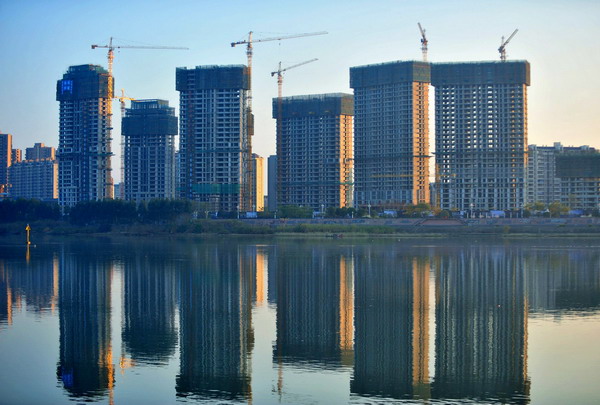 Commercial residential housing are seen along the Minjiang River in Fuzhou, capital of Southeast China's Fujian province. [Photo / Xinhua] |
A rebound in housing prices fuels speculation over more curbs
China's home prices took an upward swing since the last quarter of 2012 despite government-imposed measures to cool the market. In light of this, the State Council unveiled five new policies to reaffirm its stance on tightening the housing market. However, the new policies were questioned for their lack of originality and for not including long-anticipated rules to tighten loans for second home purchases.
A warning signal
The Chinese Government began its macro-control policies on the real estate market in 2003, with the aim of regulating overheated investment in the sector. Since the second half of 2007, the goal has shifted to curbing skyrocketing property prices. The 10 policies unveiled in 2010 introduced an array of tightening measures, ranging from raising the minimum down payment and higher interest rates for second home mortgages to putting a conditional ban on the buying of properties by non-local residents. The 10 policies were deemed the strictest control measures ever. In 2011, the State Council released another eight policies.
Hu Cunzhi, vice minister of Land and Resources, said on Feb 22 that tightening measures achieved good results in 2012, restricting home purchases for investment purposes and promoting supply-demand balance.
However, property prices didn't fall as much as people expected, and began to rebound after one-year stability, backed by the country's pro-growth policies, including two consecutive interest rate cuts and the lowering of banks' reserve requirement ratio.
Home prices keep rising at a quicker pace in major Chinese cities. Out of a statistical pool of 70 major cities monitored by the National Bureau of Statistics (NBS), 53 recorded that new home prices increased from the previous month in January, while only 10 cities saw declining prices and seven recorded the same prices.
New commercial housing prices in first-tier cities including Beijing, Shanghai, Guangzhou and Shenzhen rose 2.1 percent, 1.3 percent, 2.0 percent and 2.2 percent, respectively, on a month-on-month basis, marking a quicker pace of growth than in December.
With a foreseeable recovery in the sector, some speculative home purchase capital rushed back into the housing market. Home purchases recorded faster-than-expected growth in many cities, fueled by strong demand, price discounts and home buyers' fear of further price hikes. Property developers resumed their appetite for investment in the sector, resulting in surges in land sales, according to a report from the Standard Chartered Bank.
To tame the sizzling market, the State Council unveiled the five policies on Feb 22.
"But the five policies are the mildest in the history of property market controls. There is nothing new. They are mostly a reiteration of previous measures," said Yin Zhongli, a research fellow at the Institute of Finance and Banking of the Chinese Academy of Social Sciences.
Yin said that the new policies were milder than market expectations, as the anticipated tightening measures on loans for second home purchases weren't included. "Therefore, the new policies won't be able to contain fast-rising home prices," he said.
Liu Jianwei, a senior statistician with the NBS, thinks that an overall drastic rebound nationwide is unlikely due to an abundant home supply. "The new policies are not aimed at hurting the property market, but at sending a warning signal to the current rebound."
"The new policies set the tune for property controls this year. On the basis of maintaining continuity and stability, this year's macro-control on the property market will be appropriately tight," said Liu.
Role of property tax
In the seemingly mild set of new policies, people found a stricter measure: property tax. In China's real estate market, property tax - while well-established and taken for granted in Western countries - is a relatively new phenomenon, and is viewed as a measure to restrict the buying of homes for investment purposes.
- Stricter measures to cool property market
- Housing still on unsustainable path
- Real estate recovery gathering steam
- More Chinese cities ready for property tax pilots
- China underlines land supplies to tame housing prices
- Commercial housing oversupply to continue
- Detailed property control policies underway