Guangzhou, the nation's third-largest metropolitan economy, is switching the focal point of its planning from GDP to making a livable city with low carbon emissions and smart development, its mayor said.
The city of 12.7 million has devoted itself to innovative development, attracting strategic new industries and solving the challenges presented by traffic, waste treatment, land exploitation, food safety and managing the migrant population, Mayor Chen Jianhua said.
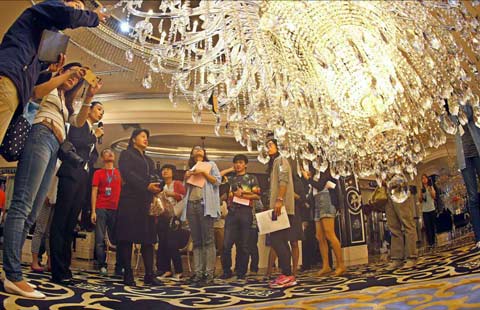
Chen made the remarks at an exhibition of projects submitted for the Guangzhou International Award for Urban Innovation on Wednesday.
The city rolled out its road map for new urbanization in September in answer to the challenges of sustainable development.
The plan shifts emphasis from materials to people, and from land and resources to human resources, knowledge and innovation.
The urban-rural society will be better integrated.
Instead of having just one city center, additional city centers will be built, with landscaping that reflects Cantonese culture to avoid a monotonous urban look.
Governance will shift to a model there the government provides guidance, while the market takes the main role and various sectors of the society participate.
Guangdong province has been working on an economic transformation in the past two years, taking on such challenges as slowing exports, establishing equal public services for migrant workers and improving community services, said Peng Peng, a senior researcher with the Guangzhou Academy of Social Sciences.
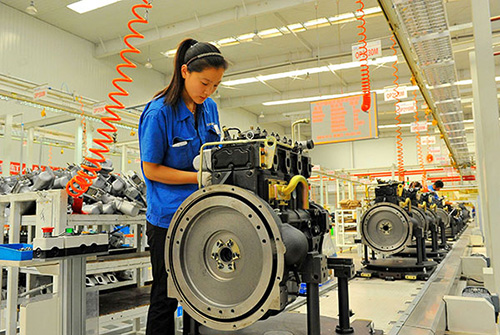
The city aims to have the service industry at the center of its industrial structure, but will also encourage advanced manufacturing and strategic new industries.
Guangzhou is no longer bound by the goal of maintaining its GDP ranking. It now takes a broader view of establishing itself in the international arena, Peng said.
The competition in the future will be among metropolitan areas that encompass clusters of cities, rather than individual cities. The Pearl River Delta may emerge as the next world-level cluster, aided by its rapidly growing network of highways and light rail, he said.
Peng sees the Nansha New Area, a State-level pilot development zone, and the Guangzhou Knowledge City, a Sino-Singaporean project to develop an area of knowledge-based industries, as the two engines for the city's development.
Guangzhou, with its geographic advantage, historical and cultural heritage, and resources, is well-positioned to become a hub in the Pearl River Delta city cluster and has the potential to become an important point in the global city network, Chen said.
This month, Guangdong issued a plan for "functional" zones, dividing the province into four types of zones, namely optimized, emphasized, ecological or prohibited development areas.
Core areas in the delta - including Guangzhou, which has a dense population and intense development, and places a heavy burden on environmental resources - are designated as optimized development areas.
The governments of these areas will be assessed primarily on the transformation of their development model, with greater emphasis on the economic structure, resource consumption, environmental protection, innovation and public services to the migrant population.
liwenfang@chinadaily.com.cn


Copyright 1995 - . All rights reserved. The content (including but not limited to text, photo, multimedia information, etc) published in this site belongs to China Daily Information Co (CDIC). Without written authorization from CDIC, such content shall not be republished or used in any form. Note: Browsers with 1024*768 or higher resolution are suggested for this site.
License for publishing multimedia online 0108263 Registration Number: 130349