MOSCOW -- China's economy has started transferring to new growth engines and searching for new incentives, a Russian expert said.
The economic restructuring itself was one of the most significant achievements made over the last decade, Yakov Berger, an expert from the Far East Institute of the Russian Academy of Science, told Xinhua in a recent interview.
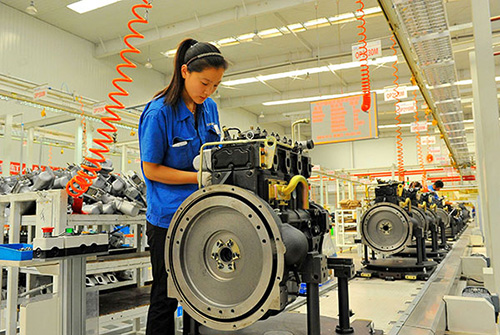
China used to rely its economic growth heavily on export, investment and cheap labor. Chinese leaders have long been aware of shortages of such an export-oriented economy and looking for a more sustainable growth model, Berger said.
In order to reach a domestically driven growth, the Chinese government made great efforts in socioeconomic fields, promoting innovations, fostering domestic markets and narrowing the income gap between the rich and the poor, the expert said.
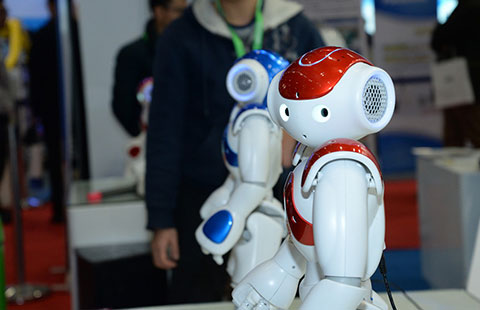
"If previously China borrowed technologies from the West and adapted them for local industries, now China has decided to create its own technologies and trademarks," Berger said.
Such task was underscored during meetings of the Communist Party of China (CPC) last year, he added.
China has been changing orientation from global markets to domestic ones. This doesn't necessarily mean the country will leave foreign markets completely or abandon raw materials imports. In fact, it remains the world's leading exporter, Berger said.
However, one driving force behind its future growth will mainly depend on the domestic market, which "enables the industry to develop in spite of any global troubles outside China," Berger said.
Reorientation to domestic markets was announced in early 2011, but preparations for the decision have been underway for a decade, the expert noted, saying this was not purely an economic task but also a political and social one, as the Chinese population must be able to afford the goods produced by the industry.
To reach this goal, China needs to build a full-scale social security system, he said.
"A person won't buy much unless he or she feels secure in terms of healthcare, education and retirement savings," Berger said.
Meanwhile, to bridge the gap between rural and urban residents, rich and poor, is another pressing task, he said.
Much has been done in the past ten years to increase farmers' income, said the expert, citing examples of the scrapped rural taxes and reshaped earnings' structure.
"For the first time ever the income of rural population was growing faster than that of the city dwellers. So the gap has not been growing as before. Also the first steps were made to reform the healthcare, enhance social security. Finally, the pension system has been set up for rural residents," Berger said.
All these have been enabling the domestic market to become a new engine of national economy, according to the expert.
Still, China faces challenges on its way of rapid growth. The government was trying to fight corruption, curb skyrocketed housing prices and deflate bubbles in a number of overheated sectors.
The new leadership needs to combine economic and social reforms to get on with the task of building a well-off society by 2020, Berger said.
Besides resolving social and economic problems, China should also set strategic targets and reach them step by step. Most importantly, the country should establish its own values and strengthen its soft power, he said.

Copyright 1995 - . All rights reserved. The content (including but not limited to text, photo, multimedia information, etc) published in this site belongs to China Daily Information Co (CDIC). Without written authorization from CDIC, such content shall not be republished or used in any form. Note: Browsers with 1024*768 or higher resolution are suggested for this site.
License for publishing multimedia online 0108263 Registration Number: 130349