Alarm over slower growth fails to recognize the painful changes made to shift toward a more sustainable growth pattern
Media fanfare about China's economic slowdown, though somewhat exaggerated, shows the high hopes that global investors have pinned on the world's second largest economy, especially with the United States and Europe still struggling with their debt problems.
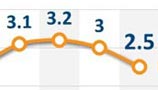
Before China released its growth figures for the first half of the year on Friday, Western media like the Wall Street Journal pointed out that growth in China is expected to slow to its lowest rate since the global financial crisis. Moreover, the newspaper suggested that the true picture could be even worse.
Is such alarm justified?
Maybe. For those who have counted on robust growth in emerging economies to make up for economic weakness in the US and Europe, they have good reason to take a second look at the prospects for a global recovery.
If China, a leading growth engine for the world economy, loses steam, what chance is there of avoiding a double-dip recession? Not much, since European policymakers still cannot agree on how to arrest the downward spiral of their sovereign debt crisis, and US politicians show little inclination to fix their huge fiscal deficits.
Yet, such a dim global growth outlook, resulting from debt-laden Western countries' inability to put their economic and fiscal houses in order, does not mean China's slowdown should be deemed as an equally worrying cloud on the economic horizon.
Chinese policymakers should certainly exercise caution to prevent too drastic a slump that may make a massive stimulus necessary to prevent a hard landing; but a 7.6-percent growth in GDP year-on-year is really not that alarming. However, policymakers should adapt themselves to such relatively lower growth as soon as possible if they want to make steady progress on improving the quality of growth and adjusting economic structure.
For foreign firms that have become accustomed to China's double-digit growth over the past three decades, it is high time they re-examined their business strategies in line with the country's new economic reality.
Their grasp of the complexity and implications of the transformation of China's growth model will have a big bearing on their future success. If it was those who best tapped into China's investment and export booms based on its cheap labor force that prevailed during the past three decades, it seems likely now that only those who can effectively facilitate consumption growth in the world's most populous country will benefit from China's economic transformation.
As the latest statistics show, the Chinese economy is slowing. But reading too much into the fact that a 7.6-percent GDP growth in the second quarter is the lowest since the first quarter of 2009 during the depths of the global financial crisis is a case of viewing the glass as half empty. It is basically a failure to recognize all the painful but necessary changes that the Chinese economy has undertaken to shift toward a more balanced, coordinated and sustainable growth pattern.
Chinese policymakers should come to grips with the challenges of economic transformation and refuse quick solutions that only bring about short-term gain for long-term pain.
For instance, though a property boom has proven almost a magic wand in immediately shoring up investment growth in this country and many others around the world, the Chinese government has so far rejected domestic calls to ease its squeeze on housing bubbles, because of concerns over their long-term impact on the economy.
It is predictable that some local officials will try to make the current slowdown an excuse to return to investment-led growth, at least for the time being. But policymakers should pay close attention to the difficulties of specific industries or regions and roll out targeted measures to help them endure the pain of economic transformation and achieve sustainable growth. However, it is important that they drive home the message that they are focused on the long-term goal.
By doing so, they will not only set an example for policymakers in debt-laden developed countries, who are unfortunately still shying away from their responsibilities to set their economic and fiscal houses in order, they will also inspire confidence in investors at home and abroad in the future of the Chinese economy.
The author is a writer with China Daily. E-mail: zhuqiwen@chinadaily.com.cn

Copyright 1995 - . All rights reserved. The content (including but not limited to text, photo, multimedia information, etc) published in this site belongs to China Daily Information Co (CDIC). Without written authorization from CDIC, such content shall not be republished or used in any form. Note: Browsers with 1024*768 or higher resolution are suggested for this site.
License for publishing multimedia online 0108263 Registration Number: 130349