|
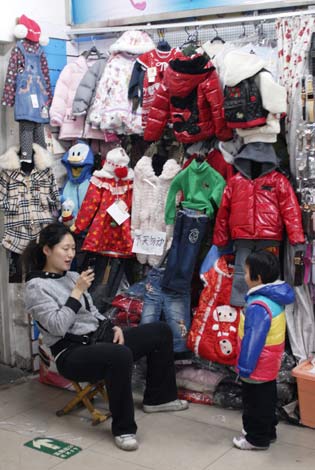 |
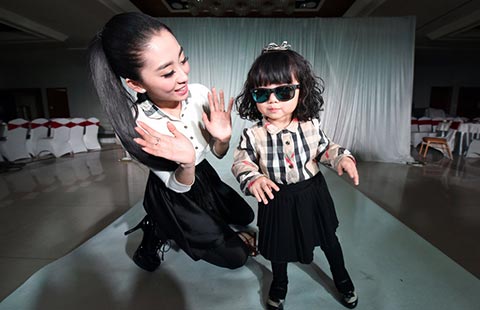
| A children's clothing vendor and her daughter at a clothes market in the Xicheng district of Beijing. By 2013, the size of China's market for children's products is expected to reach 311.1 billion yuan ($49 billion), at a compound annual growth rate of 19 percent. [Photo / China Daily] |
For Wang Xin, a 30-year-old housewife, choosing a skirt for her daughter aged 1 is a very important event.
"I want my baby to wear safe and good quality clothes because I want to give my only child the best," smiled Wang.
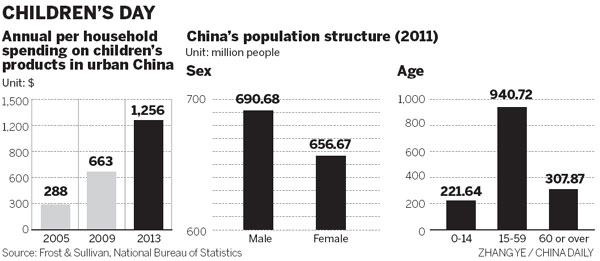
Wang's view is representative of the attitude of most of Chinese middle class parents. As their income levels rise, parents in the world's second-largest economy have more cash to spend on their children. According to Frost & Sullivan, a US-based market consultancy, annual per household spending on children's products in urban China increased to $663 in 2009 from $288 in 2005 and is expected to reach $1,256 by the end of next year.
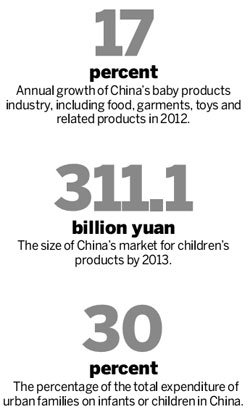
Data from the consultancy Euromonitor showed the market value of children's clothes in China reached 84.6 billion yuan in 2010, while the National Bureau of Statistics said that nearly 30 percent of the total expenditure of urban families is spent on infants or children.
A separate study from Boston Consulting Group suggested the market value of China's baby products industry - including food, garments, toys and related products - will enjoy an annual growth rate of 17 percent in 2012. And by 2013, the size of China's market for children's products is expected to reach 311.1 billion yuan ($49 billion), at a compound annual growth rate of 19 percent, according to Frost & Sullivan.
In order to cash in on the booming market, domestic and international companies have poured into the country over the past years.
Zara opened its first store for children's clothes in 2006 in Shanghai, luxury brands Gucci SA and Dior have opened children's clothing sections in the country and casual or sports wear retailers including H&M and adidas have set up divisions aimed at youngsters.
In addition to the flourishing brands, more international companies have been seeking cooperation in the emerging industry. Goodbaby Group, China's top manufacturer and retailer of babycare products, announced this year an online retail partnership with the US sportswear giant Nike Inc. Under the agreement, Goodbaby will have exclusive authorization to sell Nike's children's wear through its website, haohaizi.com.
One of the most reputable babywear brands in China, China Yeehoo Group Ltd, announced earlier this year that Lunar Capital Management and its affiliates have completed the acquisition of a majority controlling stake in the company.
Derek Sulger, a partner at Lunar who will be joining Yeehoo's board of directors, said: "Given the rising disposable income of parents and grandparents, we believe that branded baby products represent an attractive way to address China's growing domestic consumption."
 |
"Maternity clothes and baby wear have sold very well recently," said a saleswoman at a Leyou store, a major Chinese shop specializing in children's products in Beijing.
"The baby boom has brought a sales increase, although not a very sharp one, and the growth is likely to be sustained for the next few years," said Larry Kung, chief operating officer at Leyou.
Kung's optimistic view echoes the fact that China is welcoming its "dragon baby" boom, since many Chinese couples believe that children born during the Year of the Dragon, which began in late January this year, will be strong and enjoy good luck. Eleven of the 12 zodiac symbols in Chinese culture are animals - the dragon is the only one that is a mythical creature and is often related to emperors.
According to a report by the BBC, the birth rate in Hong Kong increased by 5 percent year-on-year during the last Year of the Dragon in 2000. Xinhua News Agency said China is expecting a 5 percent rise in the number of babies born in this auspicious year. Some scholars said that the so-called "fourth baby boom" is expected to last until 2015. Previous ones occurred between 1953 and 1957, in the early 1970s and in 1986.
liwoke@chinadaily.com.cn
 |

Copyright 1995 - . All rights reserved. The content (including but not limited to text, photo, multimedia information, etc) published in this site belongs to China Daily Information Co (CDIC). Without written authorization from CDIC, such content shall not be republished or used in any form. Note: Browsers with 1024*768 or higher resolution are suggested for this site.
License for publishing multimedia online 0108263 Registration Number: 130349