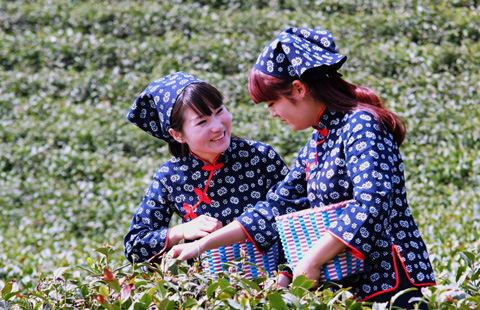
Making General Tso's Chicken or Kung Pao Chicken is not easy. Cooks have to mix the chicken, salt and egg white before heating the wok. Then dozens of seasonings are added to enrich the flavor, such as pepper, garlic, soy sauce, cooking wine, monosodium glutamate, vinegar, starch, sesame oil, Chinese onions and peanuts.
|
 |
|
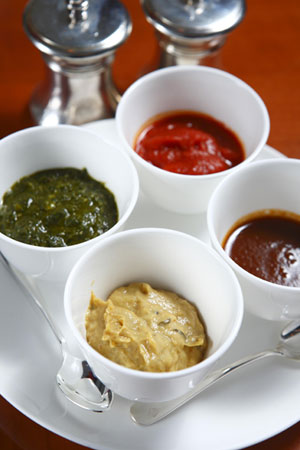
"Pepper, garlic, soy sauce, cooking wine, monosodium glutamate, vinegar, starch, sesame oil, Chinese onions and peanuts. Now, using our concentrated seasonings people can create almost the same flavors," stated an overseas food company in an advertisement recently. There is also a growing interest in the use of organic food among Chinese citizens along with an increased awareness of using healthy food. [Photo / China Daily] |
But for Beijing housewife Li Li, making the same dish can be much easier. Instead of using dried seasonings, she uses sauces. "Using concentrated chicken juice and chili liquid seasonings can create almost the same flavored General Tso's Chicken," said Li. "This method saved me a lot of time and energy both shopping and cooking."
Chen Jie, kitchen assistant general manager of Jindingxuan, a famous Guangdong-style restaurant, said: "Using sauces while cooking a dish can improve the efficiency of professional chefs. Usually it will take more than three minutes to cook General Tso's Chicken if we do it in the traditional way. But if we use sauces, the time will be reduced to a little more than one minute. Our customers will be happy because they will spend less time waiting at their table."
Guo Qiang, vice-manager with Beijing Global Village Restaurant, said: "In addition to saving time, seasoning sauces can benefit Chinese restaurants by standardizing our cooking procedures. For instance, the same dish can taste totally different if cooked by different chefs but using sauces can greatly reduce the risks."
Guo said his restaurant mostly uses the Knorr brand from Unilever because it tastes very similar to natural spices and also other brands such as IKK from Hong Kong.
"Compared with domestic producers, international brands always provide better quality and service," said Guo.
A spokesperson for Unilever said: "We've been in the food business since the 1880s and we work closely with businesses of all sizes, from independent restaurants through to hotel chains and contract caterers. We create ingredients that save precious prep time in the kitchen, without compromising on flavor or flair."
Unilever is not the only producer to meet the needs of a surging market. On the 30 seasoning shelves in a Wu-Mart supermarket in Beijing, "Knorr, Haitian, IKK, Totole all sell very well," said a saleswoman. "At present, customers are paying more attention to big brands and healthy ingredients."
According to Global Industry Analysts Inc, a global market research publisher, the market for spices and seasonings is forecast to reach more than 2.34 million tons by the year 2015. The Asia-Pacific region is projected to emerge as the fastest growing market for spices and seasonings worldwide, registering a compound annual growth rate of 3.15 percent.
Following the rapid development of the market, there is also growing interest in the use of organic food and beverages. Certified organic spices, which are grown without the use of pesticides, herbicides and dangerous fumigants, have entered retail outlets worldwide, said GIA in a report.
"Although I want to save time cooking, I do like to spend more on organic dressings to keep my recipes healthy, fresh and exciting," said Li.
Bai Yan, vice-president and secretary-general with the China Condiment Association, said: "Despite the surging demand, the strategic positioning of the Chinese condiment industry is still in its infancy as the vast majority of corporate strategy awareness is still weak, or in a preliminary sense of positioning. Some Chinese sauce making enterprises lack a clear market positioning. They usually provide a huge range of dressings without a strong degree of consumer awareness and long-term brand development strategies."
Liwoke@chinadaily.com.cn

Copyright 1995 - . All rights reserved. The content (including but not limited to text, photo, multimedia information, etc) published in this site belongs to China Daily Information Co (CDIC). Without written authorization from CDIC, such content shall not be republished or used in any form. Note: Browsers with 1024*768 or higher resolution are suggested for this site.
License for publishing multimedia online 0108263 Registration Number: 130349