Comments()
  Print
Print  Mail
Mail  Large Medium Small
|
 |
|
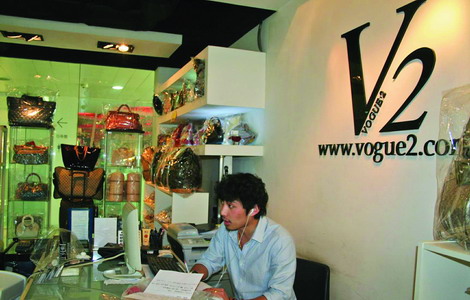
Yang Xu works in his boutique, which sells and rents luxury products. |
Yang kept marketing online. He opened a boutique on China's largest Internet trading portal, Taobao.com, and regularly updates his micro blog to promote the new business model.
Rentals have increased by about 5 percent annually for the past several years. Handbags, purses and suitcases are the most popular choices, Yang says.
But V2 still depends on sales, as the rental service accounts for only about 3 percent of its overall trade volume.
"I don't expect profits from the rental deals," Yang says.
"The service meets the demands of a small group but may bring in more potential buyers."
He believes it will take time for people to become familiar with and accept this new consumption mode.
A major challenge is presented by the omnipresence of counterfeits, which causes people to doubt the authenticity of rental luxury goods.
And some customers try to dupe rental services by returning fake bags.
Yang says he has learned to distinguish counterfeit goods after many years of practice. V2's rental contracts stipulate that any customer who replaces V2's genuine products with fake goods will not have their deposit returned.
The rental contract also requires customers to foot the bill for minor damages, but Yang says most customers take good care of the items.
Ren has traveled throughout the country and says he has yet to find another service outside Beijing.
Ren's girlfriend, Tian Jing, is also a luxury brand devotee and disciple of his service.
Before the couple met, the China Minsheng Banking Corp Ltd employee, who earns more than 10,000 yuan a month, blew more than 120,000 yuan on handbags and jewelry from Hermes, Chanel, Dior, Prada and Cartier during overseas tours.
"My colleagues carried luxury handbags and suitcases during our annual travels arranged by the bank, and I had to catch up with them," Tian says.
"But I found renting is perfect for meeting occasional needs and saves a lot of money. My friends and many bank staff members also like the service very much."
Zhu Li, manager of a luxury store near Beijing's high-end SCITECH Plaza shopping center, says: "By leasing, salaried workers can enjoy luxury brands. It saves resources and maximizes the use of high-end products."
The business' peak seasons are around holidays and year-end periods, when individuals and companies need luxury products for parties, banquets and celebrations, she says.
Wang Shijia, a 28-year-old clothing wholesaler, regularly visits Zhu's shop to rent handbags for banquets.
Wang, who was born to a wealthy family, owns nearly 50 products from a range of luxury brands but prefers to rent.
"After I started my career, I realized that it's not easy to earn money, so I've stopped squandering," says Wang, whose monthly income is nearly 50,000 yuan.
"If one can afford it, luxury goods can help to show one's taste and dignity. Otherwise, it's shameful to spend so much for nothing more than vanity."
Yang and Zhu share optimism about the luxury brand market and believe in Chinese wealth's growing momentum.
China is expected to replace the United States as the world's biggest consumer of luxury brands by 2012, a report by Ipsos' China office said last October.
Most buyers are younger than 40.
Mainlanders purchased $9.4 billion worth of luxury products in 2009, and the figure increased by 14 percent the following year, global market researcher Zheng Wenliang says, citing the report.
Global consulting firm McKinsey & Company estimates luxury sales in China will grow by 18 percent annually to reach $27 billion by 2015, when it will account for more than one-fifth of the global luxury market.
While praising the fledgling luxury goods leasing industry, experts have called for leasing options to cover daily consumption and production equipment to meet diversified social needs.
State Council research fellow Chen Wenling puts it like this: "Renters should offer services at various levels to cater to clients from different walks of life."
Copyright 1995 - 2010 . All rights reserved. The content (including but not limited to text, photo, multimedia information, etc) published in this site belongs to China Daily Information Co (CDIC). Without written authorization from CDIC, such content shall not be republished or used in any form. Note: Browsers with 1024*768 or higher resolution are suggested for this site.
License for publishing multimedia online 0108263 Registration Number: 20100000002731