Rare earth prices 'reflect market'
Updated: 2011-07-22 09:44
By Tuo Yannan and Zhang Qi (China Daily)
|
|||||||||||


Ministry says China is not manipulating conditions for key elements
BEIJING - Sharply higher rare earth prices reflect market conditions, not manipulation, the Ministry of Industry and Information Technology (MIIT) said on Thursday.
Prices started to pick up in mid-2009. Ytterbium, one of the 17 elements known as rare earths, has surged more than 10 times since 2009 and more than three times since January 2011.
 |
|
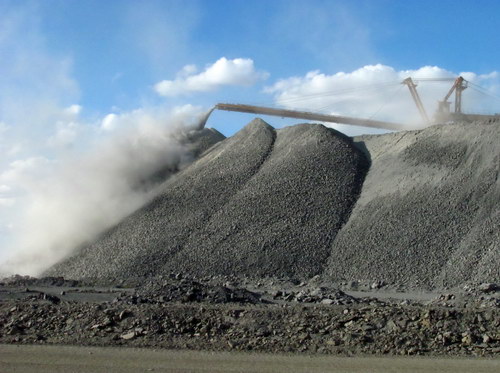
A rare earth mine in Bayan Obo, Inner Mongolia autonomous region. China is the world's largest exporter of rare earth minerals, supplying more than 90 percent of the international market, though it has only about 30 percent of global reserves.?[Photo/China Daily] |
The price of ytterbium was 580 yuan ($89.83) to 600 yuan a kilogram as of Thursday.
Rare earth prices were formerly low and are now just reflecting market conditions, Zhu Hongren, chief engineer and spokesman for MIIT, told a news conference.
He denied that the Chinese government was manipulating prices higher.
China is the world's largest exporter of rare earth minerals, supplying more than 90 percent of the international market, though it has only about 30 percent of global reserves.
Zhu said it was "a misunderstanding" that Chinese government manipulation had caused the surge in prices. He said previously, prices were far below market value because of illegal extraction, environmentally unsound expansion and smuggling.
In May, the State Council, or cabinet, established regulations on the mining of rare earths, and a special rare earths office was set up under MIIT to supervise the sector, Zhu said.
Considering the huge energy demand and environmental impact of rare earth mining, previous prices were unreasonably low and the current levels are rational, he said.
Rare earths are widely used in modern manufacturing in such industries as electronic products, green energy and aerospace alloys.
"Domestic and overseas companies need to adapt to the new price gradually," said the spokesman.
The country will provide a stable supply to the international market, Wang Caifeng, a former MIIT official, told China Daily earlier this month.
On July 14, the Ministry of Commerce announced that second-half rare earth export quotas for 26 companies will be 15,738 tons.
That means the full-year quota will be 30,184 tons, almost unchanged from last year's 30,258 tons. According to Zhu, not all first-half quotas have been used yet.
China produced more than 120,000 tons of rare earths last year, with 87,000 tons for domestic use and 34,600 tons for exports.
The production quota this year is expected to grow by 5 percent, Wang said.