
 Comments()
  Print
Print  Mail
Mail  Large Medium Small
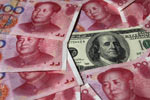
SHANGHAI - The State Administration of Foreign Exchange (SAFE) on Monday reiterated its tough stance on curbing hot money inflows, which threatens the nation's financial stability and triggers inflation.
In a statement on its website, the manager of China's $3 trillion foreign exchange reserve said it will continue its "high-pressure" clampdown on inflows of hot money, or speculative capital, to ensure financial and economic stability.
SAFE also announced penalties for 10 companies that conducted illegal foreign exchange transactions, which are at the root of hot money inflows. It's the third group of companies the administration has fined in less than a year.
China has been concerned in recent years by the prospect of surging hot money inflows that could cause speculation and bubbles in property and stocks. Some analysts have said that the loose monetary stance of the United States has led to a new round of inflows into emerging markets, including China.
Lu Zhengwei, chief economist with Industrial Bank Co Ltd, said that although the end of the US Federal Reserve Board's program of quantitative easing will ease fund flows into emerging markets, China still faces increasing pressure from hot money inflows this year.
"Expectations for the yuan's appreciation and higher benchmark interest rates provide more motivation for international speculative activities and will attract funds into the country to seek short-term returns," he said.
To drain excess liquidity, the central bank has raised benchmark interest rates three times this year. Central bank adviser Xia Bin has said that the latest 25 basis point hike on July 7 was "not enough" and further increases would be needed to address the situation of "negative interest rates", according to Bloomberg News.
China experienced hot money inflows of $35.5 billion in 2010, accounting for 7.6 percent of the increase in foreign exchange reserves during the year, SAFE said in February.
Foreign exchange reserves grew by another $138 billion in the first quarter, according to revised figures posted on SAFE's website Monday. The administration didn't say how much of that latest increase was caused by hot money inflows.
The first-quarter current account surplus narrowed 21 percent year-on-year to $28.8 billion, while the capital account surplus jumped 41 percent to $86.1 billion, according to SAFE's revised figures published on Monday.
Wang Jianhui, chief economist with Southwest Securities, said curbing hot money inflows can also help contain inflation, which reached a three-year high of 6.4 percent in June.
"Though not a major one, hot money inflows play a part in the nation's price inflation," he said. "Increasing speculative capital inflows will definitely make it harder for the government to curb inflation."
Grace Ng, an economist at JP Morgan Chase Bank Co Ltd in Hong Kong, wrote in a research note earlier this month that both the trade and capital account surpluses will increase domestic liquidity and fuel inflation.
 Car limits 'upset the apple cart'
 Wealth products lose appeal
 Looser monetary policy expected
Copyright 1995 - 2010 . All rights reserved. The content (including but not limited to text, photo, multimedia information, etc) published in this site belongs to China Daily Information Co (CDIC). Without written authorization from CDIC, such content shall not be republished or used in any form. Note: Browsers with 1024*768 or higher resolution are suggested for this site.
License for publishing multimedia online 0108263 Registration Number: 20100000002731