2011flash
ING looks to expand banking business
By Gao Changxin (China Daily)
Updated: 2011-06-21 11:12
 |
Large Medium Small |
|
 |
|
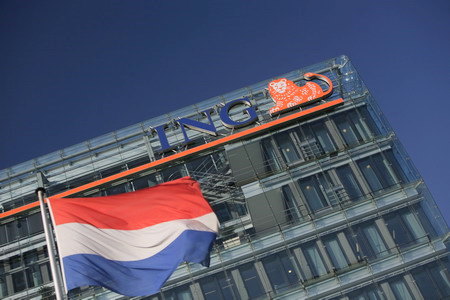
ING Group NV headquarters in Amsterdam, Netherlands. The company's banking business in China will focus on the corporate side, said Robert Scholten, the China manager of the company's banking division. [Photo / Provided to China Daily] |
SHANGHAI - The Dutch bancassurer ING Group NV plans to pin the growth of its Chinese banking business on servicing the accelerating expansion of Chinese companies overseas and European companies in China.
Robert Scholten, the China manager of ING's banking division, told China Daily on Thursday that the company's banking business in China will focus on the corporate side, using its strong foothold in Europe to provide one-stop financial services to corporate expansion across China and Europe.


"Going forward, we will be increasingly a bridge between the two (Europe and China)," said Piter de Jong, head of multinational corporate coverage at ING Asia.
After more than 20 years in the Chinese banking market, ING has built up a strong client base of Chinese companies, especially State-owned enterprises (SOEs), which, under China's "go-out" policy, are accelerating their expansion internationally.
In March, ING advised China Petroleum & Chemical Corporation, also known as Sinopec, China's State-owned oil refiner, on its $2.46 billion acquisition of a 55 percent stake in an Angolan oil field.
And in December, the Dutch company provided a 198-million-euro ($281 million) loan to the Chinese carmaker Geely Holdings Group, the owner of the Volvo brand, to fund work at its manufacturing plant in Ghent, Belgium.
The Financial Times reported in April that in the six months to the end of March 2011, Chinese businesses invested $64.3 billion in European acquisitions, trade deals and loan agreements. This was more than double the figure expended over the previous 11 quarters.
"ING has a very widely established network outside China. Chinese clients don't really look to us for our business in China, but they look at what we can do outside China," said De Jong.
"We have helped Chinese companies in central and eastern Europe, where ING is strong but where local banks do not yet have a presence."
ING has an extensive branch network and corporate client bases in 22 countries in Europe.
Currently, the new wave of European companies entering China also spells opportunities for ING, said De Jong.
He said the newcomers are mostly small and medium-sized enterprises that come to China to sell their products in the market, and not to establish a base in the country. They're following in the footsteps of the first wave of big-name companies 20 years ago and the subsequent arrival of their suppliers 10 years ago who came to use the country's pool of cheap labor and abundant raw materials.
"When these smaller companies come to China, Chinese banks don't know them or how to deal with them. The banks that know them are the European banks that know them at the headquarters level. So there we play an important role."
Though describing China as an important part of ING's growth strategy, De Jong said the company has no immediate intention of setting up a locally incorporated bank. That's because some of the restrictions imposed on locally incorporated banks, such as deposit ratios and lending limits, restrict the way the company serves its clients, according to De Jong.
"For the time being, what we have right now works quite well in how we serve our clients," he said.
| 分享按鈕 |