|
|

NPC & CPPCC Annual Sessions > Biz & Economy > Backgrounder
|
People's Congress system and NPCBy (Xinhua)
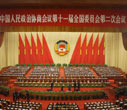
Updated: 2009-03-04 08:03 The Second Session of the 11th National People's Congress (NPC) is scheduled to open in Beijing on March 5, 2009. The People's Congress system is the fundamental political system of the People's Republic of China (PRC), the organizational form of state power of the people's democratic dictatorship in China, and the system of government of the country. The system most directly reflects the nature of the PRC, indicating the status of the Chinese people of various ethnic groups as masters in the country's political life. The NPC is the highest institution through which the Chinese people exercise their state power. In 1953, China held people's congresses at different levels. In1954, the First National People's Congress was convened, marking the establishment of the people's congress system in China. The NPC exercises legislative power, amends the Constitution and supervises its enforcement, formulates and amends basic statutes and other laws; elects and decides on the leading personnel of state-level administrative, judicial, procuratorial and military bodies, and has the right to recall them; supervises government work in accordance with the Constitution and laws; and examines and decides on the fundamental, long-term and key issues of the state. All administrative, judicial, procuratorial and military organs and other state-level institutions are responsible to the NPC and supervised by it. The NPC Standing Committee, the permanent organ of the NPC, is elected by the NPC and exercises the legislative power of the state together with the NPC. Liu Shaoqi, Zhu De, Ye Jianying, PengZhen, Wan Li, Qiao Shi and Li Peng successively served as chairmen of past NPC Standing Committees. Wu Bangguo is chairman of the 10th and 11th NPC Standing Committees. Among the ten terms of the NPC, nine had special committees except the Fourth NPC, which was in sessions during the period of the "Great Cultural Revolution" (1966-1976). The special committees are permanent bodies under the leadership and supervision of both the NPC and its Standing Committee. The NPC's delegation to the Inter-Parliamentary Union (IPU) is known as "the NPC Delegation." On Dec. 8, 1983, the Third Meeting of the Sixth NPC Standing Committee decided to join the IPU. In April 1984, the IPU Council's 134th meeting made an official announcement to accept the NPC Delegation as its member. The NPC Delegation is aimed to promote mutual understanding and friendly exchanges with parliamentary members of different countries, develop friendship and cooperation with peoples of different countries, and safeguard world peace.
|
       |
通城县| 丹江口市| 大埔区| 乌兰察布市| 策勒县| 合作市| 甘泉县| 天等县| 宜丰县| 磐石市| 视频| 石渠县| 云梦县| 乌拉特前旗| 鄂伦春自治旗| 辽宁省| 连南| 大邑县| 平湖市| 博客| 湛江市| 高平市| 陆河县| 土默特右旗| 台东县| 那坡县| 卓资县| 海丰县| 伊通| 平原县| 瑞丽市| 左权县| 咸宁市| 西安市| 盖州市| 九龙坡区| 平顺县| 桓台县| 丰顺县| 西贡区| 黑山县|