Top Biz News
Foreign-funded hospitals gain more business
By Andrew Moody (China Daily)
Updated: 2009-12-07 07:51
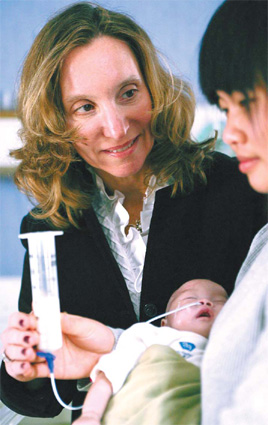
Roberta Lipson believes foreign hospitals have played a part in changing healthcare in China.
The 54-year-old American launched China's first foreign-funded hospital, Beijing United Family Hospital, in 1997.
When she first came to the country 30 years ago, Lipson said local health facilities were very poor.
"The biggest hospitals in Beijing were using pre-World War II technology, and the public suffered as a result," she said.
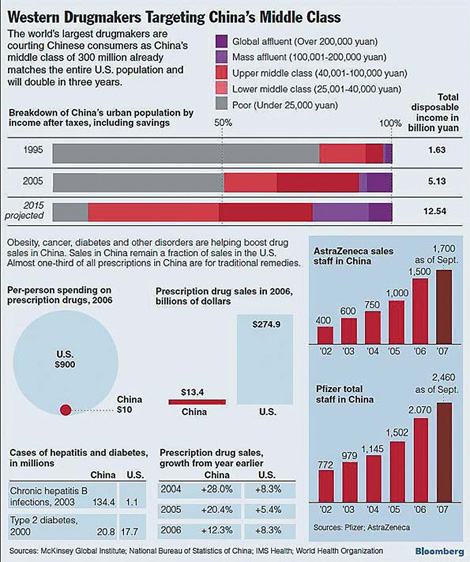
Beijing United Family Hospital in Chaoyang District, Beijing, is a state-of-the-art facility offering some of the better healthcare available in China. Some 40 percent of its patients are now Chinese.
Lipson said she is optimistic that the government's healthcare reforms will pave the way for Chinese people to have greater access to foreign hospitals.
She is hopeful, in particular, that the program whereby people in the public system get reimbursed for part of the cost of their treatment will soon apply to foreign hospitals.
Private capital encouraged
|
Roberta Lipson, chairwoman of Beijing United Family Hospital, talks with a nurse at the hospital. Lipson said she is optimistic that the Chinese government's healthcare reforms will pave the way for Chinese people to have greater access to privately run hospitals. [China Daily] |
"This is the first time we have seen in writing a policy that says private capital will be encouraged to offer health services in order to fulfill the different needs of segments of society," she said.
Lipson admits that these tend to be wealthier individuals since, with little in the way of private medical insurance programs in China, the treatment available is too costly for much of China's growing middle class.
"We are talking about senior managers of multinational companies, movie stars, bank presidents and soccer stars," she said.
The United Family Hospitals group has already expanded with another hospital in Shanghai and several clinics.
It plans two new hospitals next year, a second in Shanghai and one in Guangzhou. It has also opened a specialist cancer center in Beijing.
Lipson said she believes Chinese people now want the benefits that can be provided by foreign hospitals.
"If you go to a public facility, you often have to take the day off work in order to have just minutes of consultation time," she said.
"They would love to be able to make an appointment and to see the doctor they would like to see and with whom they have built up a relationship," Lipson said.
"If you are diagnosed with cancer, you don't want to have three to five minutes with a doctor and then be left to figure out on your own where you go from here."
Lipson rejects the idea that she is trying to replicate the US healthcare system in China, where many need a credit card before you are admitted.
She said Chinese people already must have their money at hand to be treated at China's public hospitals.
"You don't get care unless you pay up front. You could be in an emergency room needing surgery, but you would still need to come up with the money," she said.


Lipson said one way foreign hospitals have led the way in China is in the level of primary care.
When patients enter the system they are seen by people who can diagnose what the problem is and direct them to the correct specialist.
She says the public system still remains over specialized, and it can be very confusing for patients.
"I remember going to one of the major teaching hospitals in the early 1980s and being asked which department I wanted. I said all I knew was that my stomach hurt," she said.
"I needed to know whether I needed gynecology or to see a kidney, liver or stomach specialist. It turned out I had hepatitis."
Lipson said she believes Chinese authorities have realized the role that foreign hospitals can play in China in raising standards.
"When we first opened the hospital, some of the administrative officials were concerned about private healthcare, partly because it had a bad reputation previously," she said.
"I think there is an awareness now that we have raised the bar and brought in a fresh approach. While not all of what we do can be reproduced in the public system, some of it can," Lipson said.